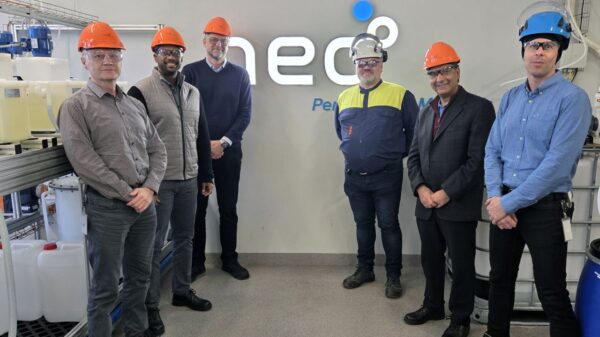

Perpetua Resources (NASDAQ: PPTA) (TSE: PPTA) has partnered with the Idaho National Laboratory (INL) to develop a modular pilot plant aimed at producing antimony from the company’s Stibnite Gold Project ores. The pilot plant, operated through Battelle Energy Alliance LLC (Battelle), will test the feasibility of producing military grade antimony trisulfide, a critical material for U.S. defense applications.
The plant will be modular and flexible, using several containerized units equipped for pilot scale testing. INL staff will commission and operate the facility, using material supplied by Perpetua Resources. The initiative is designed to strengthen domestic production of antimony while advancing workforce training in Idaho.
Jon Cherry, Perpetua’s president and CEO, said the company is eager to support U.S. defense capabilities while securing a domestic antimony supply. He added that the project will create jobs and support responsible mining practices in Idaho.
Placing the pilot plant at INL leverages the lab’s specialized programs in critical and defense minerals. Furthermore, operators will produce antimony trisulfide concentrate, which is used in munitions and advanced military systems. Furthermore, the project will provide valuable data on processing techniques and plant operation at pilot scale.
The partnership is part of a broader effort with the U.S. Army through the Defense Ordnance Technology Consortium (DOTC). Perpetua previously received DOTC funding totaling $22.4 million, including $6.9 million awarded in May 2025. This collaboration combines Perpetua’s antimony resources with INL’s scientific expertise to support the Army’s goal of creating a fully domestic “ground-to-round” supply chain for antimony trisulfide.
Read more: NevGold delivers major growth at Idaho gold project
Read more: NevGold Expands Gold-Antimony Potential at Limousine Butte in Nevada
Stibnite Gold Project recognized as only antimony reserve in US
John Wagner, INL director, said combining Perpetua’s antimony with the lab’s processing expertise addresses a national security priority. He added that building domestic production strengthens supply chain resilience and supports workforce development in Idaho.
INL has extensive experience in critical materials research, including mineral characterization, geochemical modeling, and material separation. These capabilities will support the pilot plant’s testing and contribute to improved processing methods for defense minerals.
U.S. Representative Mike Simpson praised the collaboration, noting that Idaho could become a key domestic source of critical minerals. He said the project represents a major opportunity for both the state and national security.
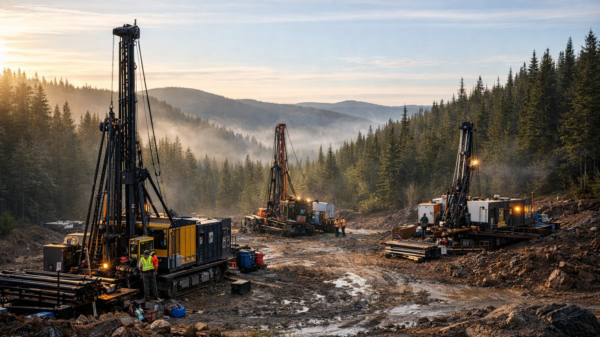
The Stibnite Gold Project is the only identified antimony reserve in the United States. Perpetua anticipates supplying up to 35 per cent of U.S. antimony demand during the project’s first six years. In addition, the project aims to meet long term Department of Defense needs while creating hundreds of family wage jobs.
The initiative will also focus on environmental restoration, improving water quality, and restoring fish access to spawning habitats at the historical mine site. Perpetua plans to integrate modern mining approaches to safely redevelop the abandoned site while extracting gold, silver, and antimony.
Perpetua Resources’ Stibnite Gold Project, located in the Stibnite-Yellow Pine district of central Idaho, contains high grade gold and the country’s only identified antimony reserve. The project combines exploration, restoration, and responsible redevelopment. In addition to supporting defense mineral supply chains, it aims to create sustainable economic opportunities in the region.
Read more: NevGold targets U.S. critical mineral supply chain with new antimony-gold find
Read more: NevGold expands high-grade antimony discovery at Nevada’s Limousine Butte Project
Several other companies have followed Perpetua’s lead
Antimony trisulfide from Stibnite is the only known domestic source capable of meeting U.S. defense requirements for small arms, munitions, and missile systems. Successfully producing this material domestically could reduce reliance on foreign sources and enhance national security.
INL serves as the nation’s center for nuclear energy research, while also focusing on strategic national security technologies, critical minerals, and workforce development. Battelle Energy Alliance manages the laboratory for the Department of Energy, providing specialized staff and operational expertise for projects such as the pilot plant.
By establishing pilot scale production at INL, Perpetua and its partners aim to demonstrate both technical feasibility and operational readiness. Additionally, the project will train skilled operators in handling critical minerals for defense applications.
The collaboration represents a key step toward a fully domestic supply of antimony trisulfide, with potential long term benefits for U.S. defense readiness and industrial independence. Meanwhile, the Stibnite Gold Project continues to advance toward commercial operations while integrating environmental and community focused objectives.
Several other companies are following Perpetua Resources’ recent push into antimony, including United States Antimony Corporation (NYSE: UAMY) and NevGold Corp (CVE: NAU) (OTCMKTS: NAUFF) (FRA: 5E50).
U.S. Antimony has restarted mining at its historic Stibnite Hill site in Montana. The company operates the only currently permitted antimony smelters in North America, located in Thompson Falls, Montana. UAMY plans a major expansion to boost its Montana smelter’s output to over 300 tons per month by the end of 2025.
NevGold, operating at the Limousine Butte Project in Nevada, has recently reported substantial antimony potential. In February 2025, the company disclosed surface rock samples with up to 10 per cent antimony.
.
NevGold Corp is a sponsor of Mugglehead news coverage
.