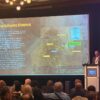

Researchers at Australia’s Monash University are in the midst of developing what could be a groundbreaking breath test for detecting silicosis, a debilitating lung disease caused by inhaling silica dust in industries like mining and construction.
The team, led by Professor Jane Bourke and including lung health experts like Dr. Paris Papagianis, have been analyzing unique chemicals in exhaled breath that signal the presence of silicosis. They collected samples from people with and without the disease during early clinical pilots to identify key markers.
The portable device they are working on would function like an alcohol breathalyzer, allowing on-site screening at workplaces. It could categorize workers into low, medium, or high risk, prioritizing highest-risk individuals for follow-up tests such as X-rays or lung function assessments.
This approach would prioritize detecting the disease early before symptoms show on imaging, enabling timely interventions that manage symptoms, slow progression and help workers stay employed or retrain. It could potentially cut screening costs by 10 to 30 per cent for governments and programs.
“If we can improve detection by even 10 to 30 per cent, that translates to major savings for government and reduced pressure on already stretched screening services,” said Papagianis.
Monash has been studying silicosis for more than a decade.
Team develops sensors; aims for government integration
The Monash Institute of Medical Engineering’s MedTech Commercialisation Advancement Program (MCAP) accelerated this innovation through 10 weeks of expert guidance on commercialization, intellectual property, economic modelling and user-focused design.
Currently, the team developing the tool says that they plan to convert their findings into portable sensors suitable for real-world use and progress toward field testing at high-risk worksites. They hope it could one day be adopted as a government-subsidised screening tool and integrated into existing occupational health programs across the country.
The school’s MCAP launched in 2022 as a Victorian government-supported pilot to advance prototypes toward market readiness. It has delivered multiple successful projects. These include BioFETS, an electronic biomarker detection system used to assist with early diagnosis of conditions like Alzheimer’s Disease; and Project UNIQUE, a digital tool used to enhance communication with children who have autism.
Monash highlighted these other recent achievements in its latest Impact Report.
Read more: Breath Diagnostics advances pre-op pneumonia screening with FDA breakthrough designation
Breath analysis tech shows great potential in other fields
The technology continues to evolve, offering non-invasive diagnostics for various conditions.
In the United States, Breath Diagnostics has pioneered the OneBreath platform, which captures volatile organic compounds (VOCs) from a single breath using a chemical microreactor for enhanced sensitivity. In addition to proven accuracy in lung cancer screening, the FDA recently granted Breakthrough Device Designation to OneBreath for assessing pneumonia risk in adults before elective cardiac surgery.
“This designation reflects FDA recognition of the platform’s potential clinical impact and supports its broader translational trajectory,” Breath Diagnostics CEO Ivan Lo highlighted in a blog posting on Feb. 28.
Beyond cancer screening, breath tech has advanced for other applications. In Britain, Owlstone Medical’s Breath Biopsy analyzes VOCs to diagnose kidney disease by detecting metabolic changes and to distinguish chronic obstructive pulmonary disease from similar conditions. This enables precise monitoring in large cohorts.
Additionally, researchers at CU Boulder developed Modulated Ringdown Comb Interferometry to differentiate pneumonia from asthma in children through breath samples, aiding early respiratory disease detection without invasive tests. They published their findings on the new technique in the journal Nature on Feb. 19, 2025. The researchers described it as a laser-based method for ultra-sensitive gas analysis, capable of identifying molecules in complex samples like human breath.
These innovations integrate AI for pattern recognition, expanding the role of breathomics in personalised medicine.
Read more: Prestigious medtech intelligence firm recognizes Breath Diagnostics for innovation
Follow Rowan Dunne on LinkedIn
rowan@mugglehead.com