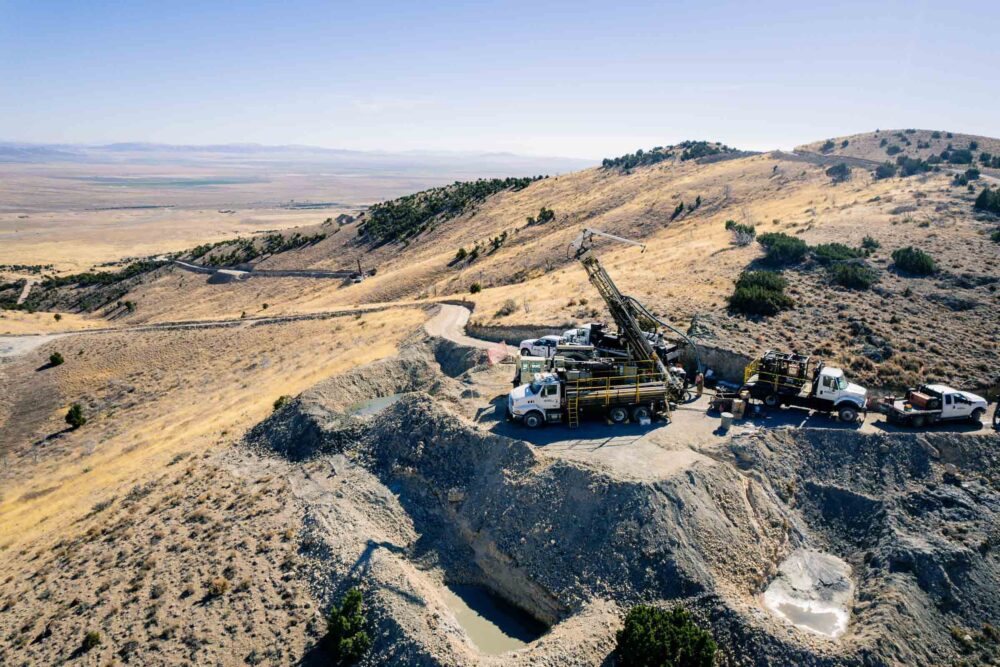

Liberty Gold Corp (TSE: LGD) (OTCMKTS: LGDTF) (FRA: PGW) has advanced its Black Pine project in Idaho after entering the federal environmental review phase, marking a key permitting step.
The Toronto-based company said the United States Forest Service has issued a notice of intent to prepare an environmental impact statement. Consequently, the project has formally entered the federal review process required under U.S. law.
Liberty stated that the notice begins a structured review under the National Environmental Policy Act. Additionally, the process will involve public input, technical assessments and environmental analysis with federal and state agencies.
The environmental impact statement will proceed through several stages. First, agencies will conduct public scoping and gather feedback on potential impacts. Subsequently, regulators will prepare a draft report, followed by a public review period and a final version.
The company said the final report will support a federal record of decision. Meanwhile, regulators will also consider Liberty’s mine plan, which they deemed complete in November.
Shares of the company rose more than 6 per cent on Monday after the announcement. Consequently, Liberty Gold’s market capitalization reached approximately CAD$650.6 million, or USD$468 million.
Black Pine sits within the Great Basin, a major mining region in the western United States. Additionally, the deposit ranks among the larger oxide gold projects in the country.
Liberty estimates indicated resources of roughly 4.2 million ounces of gold at the site. Furthermore, earlier studies suggest the mine could produce about 2.2 million ounces over 17 years.
In January, the U.S. government added Black Pine to its FAST-41 program. This initiative aims to streamline permitting timelines for large infrastructure and resource projects.
Read more: NevGold reports over 93 per cent gold recovery after antimony processing at Limousine Butte
Read more: NevGold discovers transformational oxide gold-antimony structure at Limousine Butte
FAST-41 is a key tool for advancing critical minerals
Idaho officials have also aligned their permitting process with the federal framework. Consequently, Black Pine has become the first precious metals project to follow a fully coordinated state and federal review.
Chief executive Jon Gilligan said the milestone follows completion of early technical and environmental work. Additionally, he noted that the project now moves into a more structured and transparent review phase.
Gilligan added that the FAST-41 designation provides a clear permitting schedule. Meanwhile, the public can track progress through disclosed timelines and agency coordination.
The company continues feasibility-level work at the project. Furthermore, it plans to release a technical report before the end of the year.
The FAST-41 program has also become a key tool for advancing critical minerals projects in the United States. Consequently, federal agencies are using the framework to accelerate permitting for materials considered essential to national security and supply chains.
Projects tied to energy transition and defence needs have received particular attention. Additionally, developers working on lithium, rare earths and strategic metals have increasingly sought FAST-41 designation to reduce regulatory uncertainty.
For example, Perpetua Resources Corp (TSE: PPTA) (NASDAQ: PPTA) secured FAST-41 coverage for its Stibnite project in Idaho. The project targets gold alongside antimony, a mineral used in military and battery applications. Furthermore, the designation has helped coordinate federal and state reviews under a single timeline.
Similarly, Lithium Americas Corp (TSE: LAC) (NYSE: LAC) has advanced its Thacker Pass project in Nevada under a streamlined permitting approach. Consequently, the company has benefited from clearer scheduling and improved interagency coordination as it develops a major domestic lithium source.
Read more: NevGold Corp. advances toward gold-antimony resource with expanded Nevada drilling
Read more: NevGold expands Bullet Zone discovery as drilling confirms oxide gold-antimony system
Antimony has emerged as principal focus
The growing emphasis on critical minerals has also pushed smaller companies to highlight strategic elements within their portfolios. Additionally, firms are increasingly framing projects around U.S. supply chain needs rather than solely gold or base metals output.
Antimony has emerged as a particularly important focus due to limited domestic production. Meanwhile, companies with exposure to the metal have begun drawing greater attention from investors and policymakers.
NevGold Corp (CVE: NAU) (OTCMKTS: NAUFF) (FRA: 5E50) in Nevada has emphasized antimony potential within its broader gold projects. Consequently, the company is positioning itself within the evolving critical minerals narrative tied to U.S. resource security.
This shift reflects a broader industry trend. Furthermore, developers are aligning exploration and messaging strategies with federal priorities to improve project visibility and potential permitting outcomes.
NevGold Corp is a sponsor of Mugglehead news coverage
.