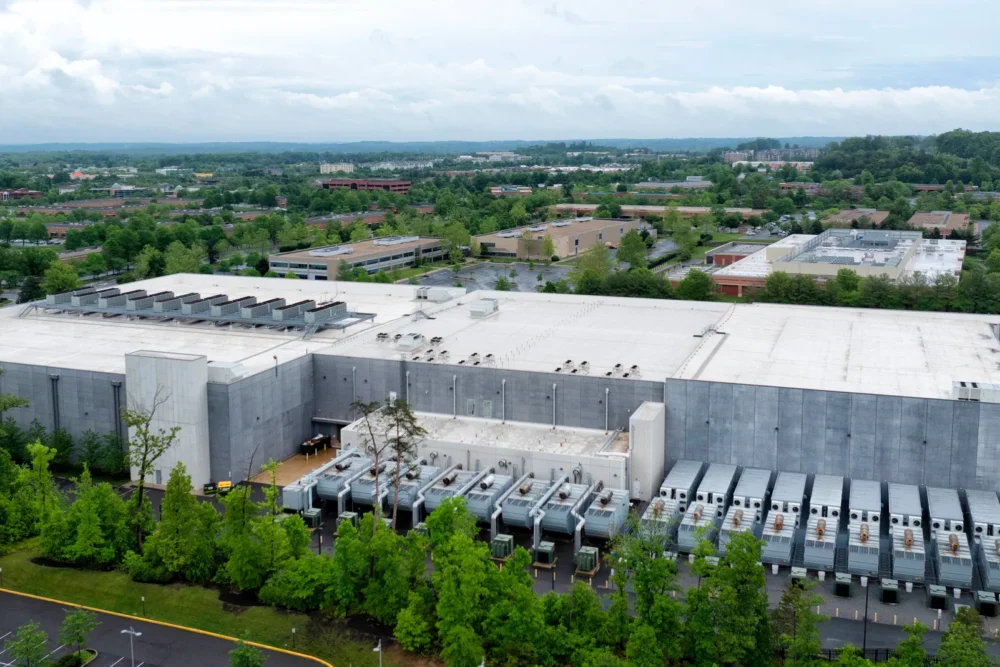

Major technology companies are pouring hundreds of billions into artificial intelligence, fueling claims that the spending drives U.S. economic growth.
Executives and politicians have pointed to the surge as proof the economy remains strong, but some Wall Street economists now question how much that investment truly benefits domestic output.
Companies such as Meta Platforms Inc. (NASDAQ: META), Amazon.com Inc. (NASDAQ: AMZN), Alphabet Inc. (NASDAQ: GOOGL), and Microsoft Corp. (NASDAQ: MSFT) spent heavily on AI infrastructure last year. They plan to invest roughly USD$700 billion this year on new data centres and advanced chips. Those facilities will also train and operate increasingly complex AI models.
The spending wave has energized investors and lifted major stock indexes. Meanwhile, policymakers have cited the boom as a reason to avoid tighter state-level regulation. President Donald Trump argued in November that AI investment makes the U.S. economy the “hottest” globally. He also warned that a patchwork of state rules could slow that momentum.
Several economists initially backed that narrative with supportive data. Jason Furman of Harvard University wrote that information processing equipment and software drove 92 per cent of GDP growth early this year. Additionally, economists at the Federal Reserve Bank of St. Louis estimated AI-related investment accounted for 39 per cent of third-quarter growth in 2025.
However, some analysts now say that story lacks depth. Joseph Briggs, an analyst at Goldman Sachs Group Inc. (NYSE: GS), told The Washington Post that the argument seemed logical at first glance. Consequently, many observers may not have examined the numbers closely enough.
Read more: Google DeepMind CEO warns of peril should we lose control of AI systems
Read more: Investment firm thinks TOTO is a highly undervalued AI player
Economists struggle to measure AI’s broader productivity effects
Jan Hatzius, chief economist at Goldman Sachs, has taken a more cautious stance. He said AI investment contributed almost nothing to U.S. GDP growth in 2025. Furthermore, he argued that public discussion has overstated AI’s measurable economic impact.
Hatzius pointed to one key factor in the GDP calculation. Much of the hardware powering AI systems comes from overseas suppliers. Consequently, imports of advanced chips and equipment offset domestic spending in official statistics.
He noted that purchases of Taiwanese and Korean semiconductors boost those countries’ output. However, those imports do not significantly raise U.S. GDP. In addition, companies often source servers and specialized components from global supply chains.
Economists also struggle to measure AI’s broader productivity effects. There is currently no reliable method to isolate how AI tools improve efficiency across industries. Meanwhile, many business leaders report limited gains so far.
A recent survey of nearly 6,000 executives across the United States, Europe, and Australia found widespread AI adoption. About 70 per cent of firms said they actively use AI systems. However, roughly 80 per cent reported no meaningful change in employment or productivity.
Investors continue to reward companies that promise AI-driven growth. Furthermore, capital spending on data centres remains strong across the technology sector.
However, despite debate over near-term GDP effects, major research firms still project strong long-term expansion for artificial intelligence. Bain & Company estimates the global AI market could exceed USD$1 trillion before the end of the decade. In addition, Fortune Business Insights and Grand View Research forecast the sector growing from roughly USD$294 billion in 2025 to well above USD$1 trillion in the early 2030s. Consequently, many analysts expect annual growth rates above 25 to 30 per cent as adoption spreads across industries.