
A new global race for critical minerals is gathering speed as governments pour billions into strategic stockpiles aimed at protecting national security and industry.
From Washington’s proposed USD$12 billion Project Vault to new reserves in Europe and Asia, policymakers are treating metals as strategic assets. Additionally, they are moving to cut reliance on concentrated supply chains and potential export controls.
Patrick Schröder, a senior research fellow at Chatham House, said metals and minerals now sit at the center of modern stockpiling efforts. He explained that governments want to reduce exposure to dominant suppliers and sudden trade restrictions.
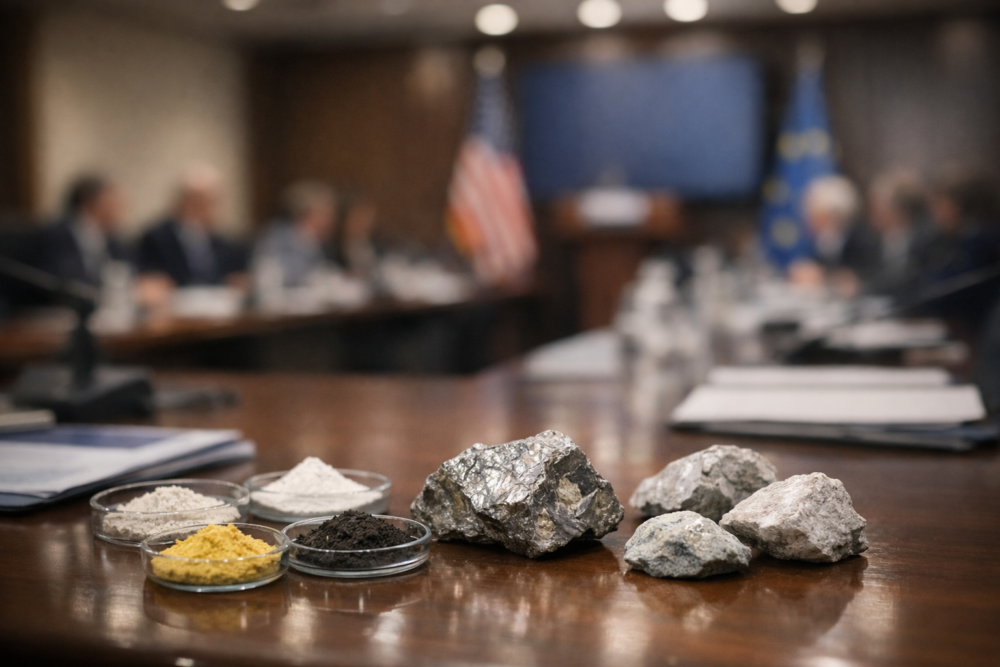
In the United States, officials recently outlined Project Vault, a roughly USD$12 billion strategic mineral reserve. The plan would build inventories of rare earths and other essential metals used in defense, electrification and advanced manufacturing. Furthermore, the initiative aims to cushion American manufacturers against sudden supply disruptions.
Project Vault also aligns with other policy efforts. Additionally, Washington launched the Forum on Resource Geostrategic Engagement, or FORGE, to coordinate pricing and project development among allies. In addition, the Pax Silica initiative seeks to secure materials linked to artificial intelligence supply chains.
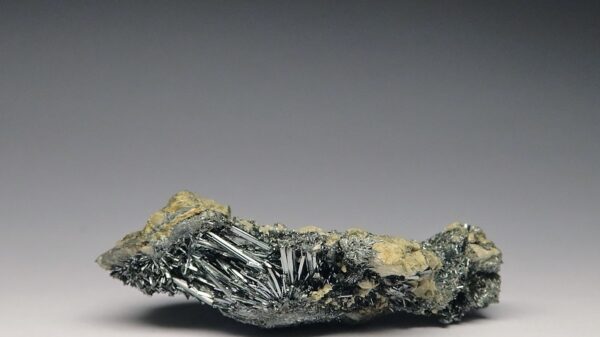
Australia in January unveiled plans for an AUD$800 million state-backed critical minerals reserve. The strategy prioritizes antimony, gallium and rare earth elements. Consequently, Canberra signaled it intends to play a larger role in shaping supply security.
The European Union is advancing a joint reserve under its RESourceEU strategy. Italy, France and Germany are expected to spearhead the effort. Meanwhile, officials aim to pool purchasing power and build buffer stocks across member states.
Read more: NevGold expands high grade antimony discovery at Nevada’s Limousine Butte Project
Read more: NevGold targets U.S. critical mineral supply chain with new antimony gold find
Countries shifting towards resource-focused national mindset
India and Brazil agreed last weekend to deepen cooperation on rare earths and other critical minerals. Additionally, New Delhi wants to diversify supply and reduce dependence on China. The pact focuses on trade expansion and more resilient supply chains for clean energy and defense industries.
South Korea earlier this year rolled out a critical minerals plan backed by about USD$172 million in state support. Furthermore, Seoul plans to expand both stockpile volumes and related infrastructure.
Schröder said many countries are shifting toward a more resource-focused national mindset. However, he warned that strategic stockpiling can drift into hoarding if governments use it coercively or without transparency.
Analysts describe the policy pivot as a structural change in commodity markets. Ewa Manthey, a commodities strategist at ING, said supply chains for metals remain fragile. She pointed to years of underinvestment, lengthy permitting timelines and geographic concentration.
In past commodity cycles, high prices typically encouraged faster mine development. Consequently, governments felt less pressure to hold large inventories. However, Manthey said new supply now arrives slowly even when prices rise.
As a result, inventories themselves have become part of national supply strategies. She added that the shift carries clear nationalist elements.
Natalie Scott-Gray, a senior metals analyst at StoneX, described the trend as both resource nationalism and a catch-up effort. Additionally, she noted that China has long built strategic metal reserves and released them during shortages.
China dominates rare-earth processing and controls much of global refining capacity for several industrial metals. Furthermore, even when deposits exist elsewhere, processing often remains concentrated in Chinese facilities.
Read more: NevGold delivers major growth at Idaho gold project
Read more: NevGold Corp. advances toward gold antimony resource with expanded Nevada drilling
Analysts expect stockpiling to accelerate
Scott-Gray said earlier commodity cycles centered on weather shocks or basic supply-demand imbalances. Conversely, she argued that policy and geopolitical risk now directly shape market outcomes.
Goldman Sachs (NYSE: GS) described the recent surge in demand for gold and industrial metals as insurance-type buying. Additionally, the bank said investors and governments increasingly view physical inventories as protection against uncertainty.
Analysts expect stockpiling to accelerate, particularly for energy-transition and defense-related metals. Meanwhile, governments increasingly treat supply chains as part of national security infrastructure rather than simple commercial networks.
.