FUJIFILM Holdings Corporation plans fivefold tape capacity expansion
The 10 billion yen investment runs through fiscal 2028 and primarily expands manufacturing for the latest LTO Ultrium 10 generation.
 Julian Okafor
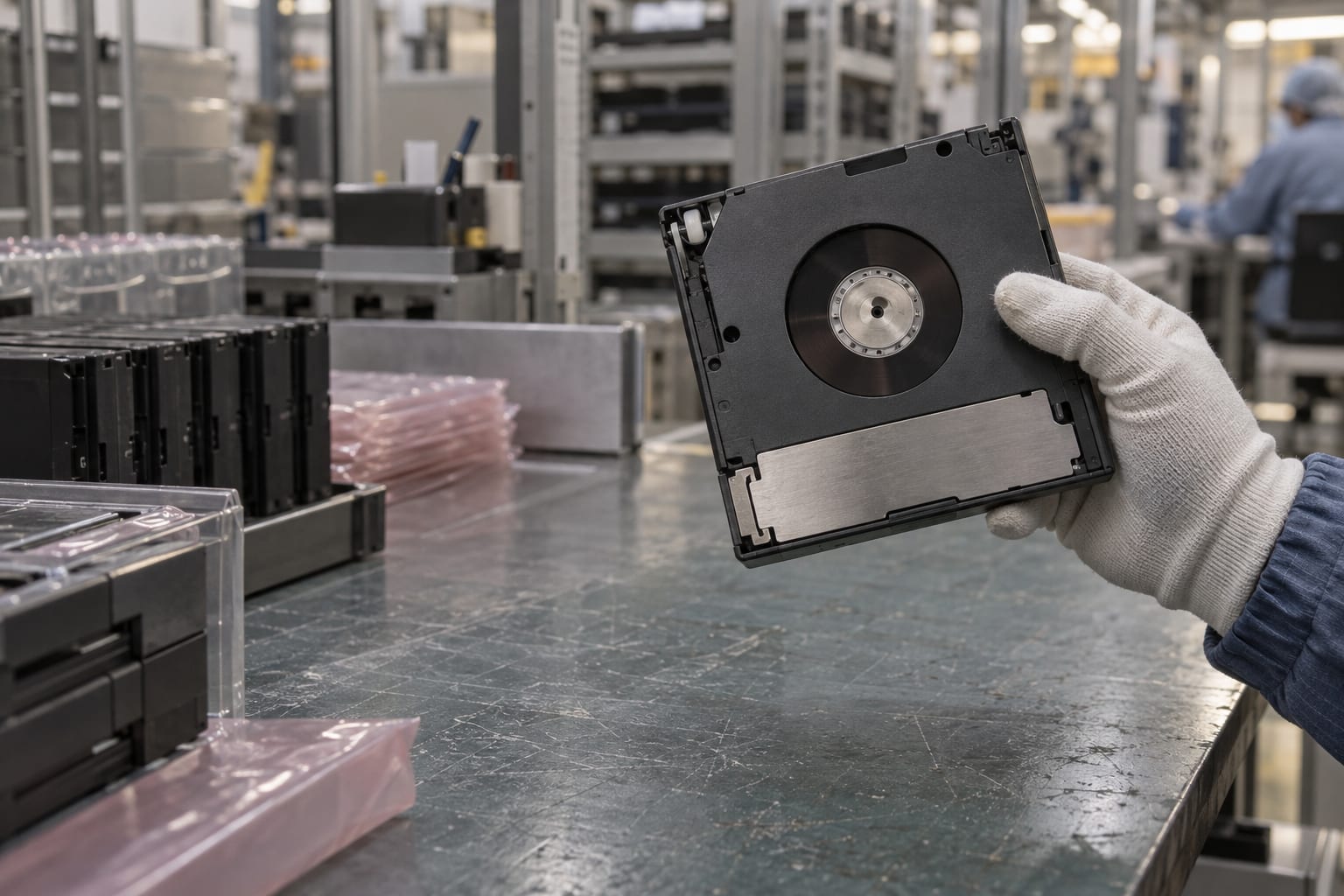
A planned fivefold increase in magnetic-tape shipment capacity would expand a storage supply chain serving cloud operators and AI archives. FUJIFILM Holdings Corporation TYO4901, the Tokyo-based technology group whose businesses include data-storage tape, is planning about 10 billion yen of production investment, according to its Oct. 29 announcement.
The group's operating subsidiary, FUJIFILM Corporation, will expand manufacturing facilities and staffing at the Kanagawa Factory's Odawara Site. Spending runs from fiscal 2026 through fiscal 2028, with the fivefold shipment-capacity target measured against fiscal 2025.
Fujifilm shares rose to 3,477 yen in Tokyo on Oct. 29, according to the 3:30 p.m. JST closing quote for TYO4901. The announcement attributes demand growth to generative AI and cloud services but identifies no customer contracts or associated revenue forecast.
The expansion primarily targets the latest LTO Ultrium 10 generation, whose highest advertised cartridge capacity assumes data compression. The Oct. 29 release gives no annual production ramp-up schedule or interim commissioning date; its timetable for the expansion is the fiscal 2026 through fiscal 2028 investment window.
The Investment Expands Dedicated Tape Facilities
Fujifilm describes the spending as its largest investment to date in dedicated LTO tape facilities. That is a narrower description than the largest investment across all its magnetic-tape operations, and the release does not frame the comparison as a twenty-year record.
"The approximately 10 billion yen investment represents the largest investment Fujifilm has made to date in dedicated facilities for LTO tape," Fujifilm said in the release.
The company says major cloud service providers and data-centre operators have been expanding their use of tape. It also points to physical isolation from networks as a reason for demand, because cartridges can be held offline to protect archived information from ransomware.
Fujifilm's materials technology combines barium ferrite and strontium ferrite particle-design techniques to raise recording density. Thursday's release says the latest-generation product launched in 2025, placing the factory investment behind an existing technology rather than announcing a new storage format.
The Oct. 29 release does not give the factory's existing cartridge output, the investment split between facilities and personnel, or an expected return on the spending. Without an absolute shipment baseline in that release, the fivefold target cannot be converted into a verified number of additional cartridges or terabytes supplied.
The Highest Cartridge Rating Requires Compression
The 100-terabyte headline capacity is not the amount of uncompressed data that fits on a cartridge. Fujifilm's April 2 US availability announcement specifies 40 terabytes of native capacity, with up to 100 terabytes at a compression ratio of 2.5 to one.
The same specification lists a native transfer rate of up to 400 megabytes per second. Its compressed transfer-rate rating reaches 1,000 megabytes per second, so both headline capacity and throughput depend on the distinction between native and compressed data.
The Dec. 22, 2025 product release explains how the higher-capacity version differs from the earlier 30-terabyte LTO-10 cartridge. A thinner aramid base film allows approximately 30 per cent more tape length, alongside increased recording density.
Fujifilm said that version would begin shipping in January 2026 and would work with the same LTO-10 drive hardware as the earlier cartridge. Its April announcement subsequently confirmed US availability, separating a product already on sale from the additional manufacturing capacity now planned.
International Business Machines Corporation NYSEIBM, the enterprise technology supplier that sells tape media and storage systems, lists the same capacity distinction on its current LTO media product page, checked Oct. 29. Its higher-capacity LTO-10 cartridge offers 40 terabytes native and up to 100 terabytes compressed.
IBM also lists an 18-terabyte native LTO-9 cartridge. The comparison places Fujifilm's expansion within an established generational increase in archive density; Thursday's announcement does not disclose an exclusive supply agreement with IBM or another storage-system vendor.
AI Infrastructure Spending Reaches Beyond Servers
The storage investment follows financing elsewhere in the AI equipment chain. IREN Limited NASDAQIREN, an AI cloud provider operating data centres and computing infrastructure, announced a completed US$363 million equipment refinancing on Oct. 28.
Mugglehead's earlier coverage of IREN's refinancing tracked capital returned from deployed servers and networking equipment. Fujifilm's announcement concerns spending to expand media manufacturing, and neither release establishes a purchasing relationship between the companies.
Read more: IREN Limited completes US$363M refinancing for operating AI equipment
The investment programme runs through fiscal 2028, according to Fujifilm's Oct. 29 release. That announcement provides no earlier dated capacity milestone against which to measure progress toward the fivefold shipment-capacity target.