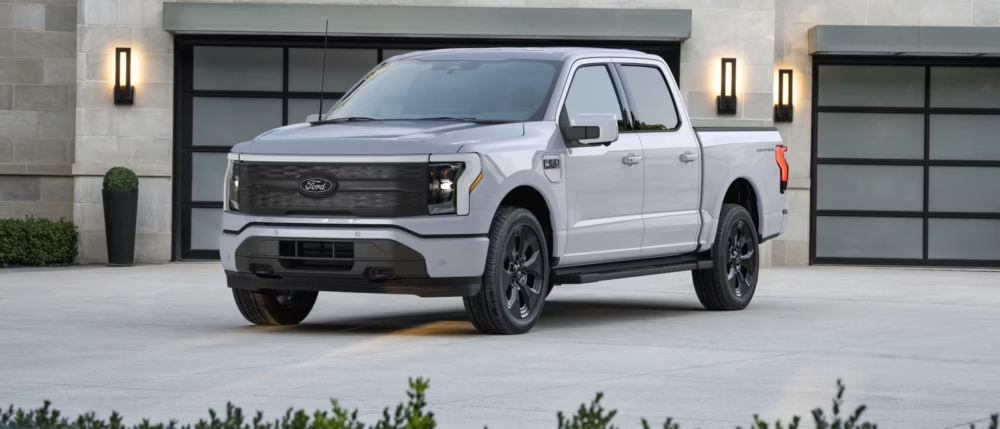

Ford Motor Co. (NYSE: F) has pulled back from its most ambitious electric-vehicle plans after steep financial losses and cooling U.S. demand pushed the automaker to reset its strategy.
The company said Monday that it will redirect investment toward more efficient gasoline engines and hybrid models, marking a major shift for an industry that had spent years insisting a rapid EV transition was inevitable.
Ford confirmed that it will stop producing the F-150 Lightning electric pickup and instead develop an extended-range version with a gasoline engine. Executives framed the move as a response to current market realities.
The company will also overhaul several manufacturing sites. Its Tennessee Electric Vehicle Center, once central to Ford’s EV roadmap, will now operate as the Tennessee Truck Plant and focus on affordable gas-powered trucks. Meanwhile, its Ohio Assembly Plant will build a new van offered in gas and hybrid options.
The changes come after Ford’s EV division lost USD$13 billion since 2023. The company expects to book a USD$19.5-billion charge, mainly in the fourth quarter, tied to the slowdown in electric-vehicle momentum.
CEO Jim Farley said the pivot reflects customer preferences and a need to protect profitability. He noted that Ford will now aim investment at its commercial Ford Pro division, trucks, hybrids and its emerging battery-energy storage business.
Farley said consumer behaviour had shifted quickly, and the company had to adjust. He added that the new approach will produce a stronger and more resilient Ford. Industry analysts read the move as an admission that EV demand has not accelerated at the pace many automakers predicted.
Read more: Lithium-ion battery market set to double by 2030
Read more: Could a breakthrough sodium battery material ease reliance on costly lithium supplies?
EV adoption lags behind expectations
Analysts also viewed the decision to scrap the Lightning as a sign that Ford needed to rethink its approach to large electric pickups.
Sam Fiorani, vice president at AutoForecast Solutions, said the Lightning never reached production levels that Ford had expected. He noted that Ford’s choice to adapt an existing gas-powered platform for the electric drivetrain kept costs down and proved wise as demand softened. Fiorani added that the long-uncertain future of BlueOval City now appears set, as the plant shifts toward building lower-cost trucks.
EV adoption in the U.S. continues to lag expectations. Electric vehicles made up about eight per cent of new-vehicle sales last year. However, price remains a major barrier. Kelley Blue Book reported an average EV transaction price of USD$58,638 last month, far above the average across all new vehicles.
Charging access also remains uneven. Many Americans rely on home charging, yet not all households or apartment dwellers can install equipment. Public charging has improved, but not fast enough to ease concerns for mainstream buyers.
Government policy has also changed. Since returning to office, President Donald Trump has reversed many Biden-era incentives that supported EV growth.
The Biden administration never required Americans to buy EVs, but it offered generous tax credits and set aggressive fuel-economy and emissions targets that encouraged automakers to expand their electric lineups. Biden wanted half of all new U.S. vehicle sales to be electric by 2030.
The Trump administration has since withdrawn tax credits, reduced the federal EV adoption target and proposed looser emissions rules. These reversals, combined with soft demand, have affected automaker planning across the sector.
Read more: Albemarle sells refining catalyst units as lithium supply glut persists
Read more: American Battery Tech stock slides after loss of US$58M DOE grant
Ford expects half of its volume to consist of hybrids
Fiorani said the combination of slower consumer uptake and weaker regulatory pressure has pushed companies to revisit their timelines. He added that EVs remain central to the industry’s long-term plans, yet the transition will take far longer than earlier projections suggested.
Ford now expects half its global volume to consist of hybrids, extended-range EVs and full EVs by 2030. That represents a jump from 17 per cent this year. The company believes the mix will better reflect how customers plan to balance range, charging access and affordability. Additionally, executives said hybrids offer an easier entry point for buyers who want better fuel efficiency without major lifestyle changes.
Several major automakers have adjusted their electrification strategies in response to the same pressures. Companies have slowed EV launches, shifted resources to hybrids and reevaluated battery-plant buildouts. Analysts expect more changes if high prices, economic uncertainty and infrastructure gaps persist.
.