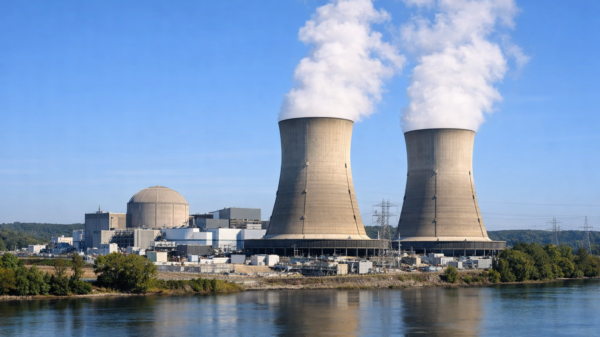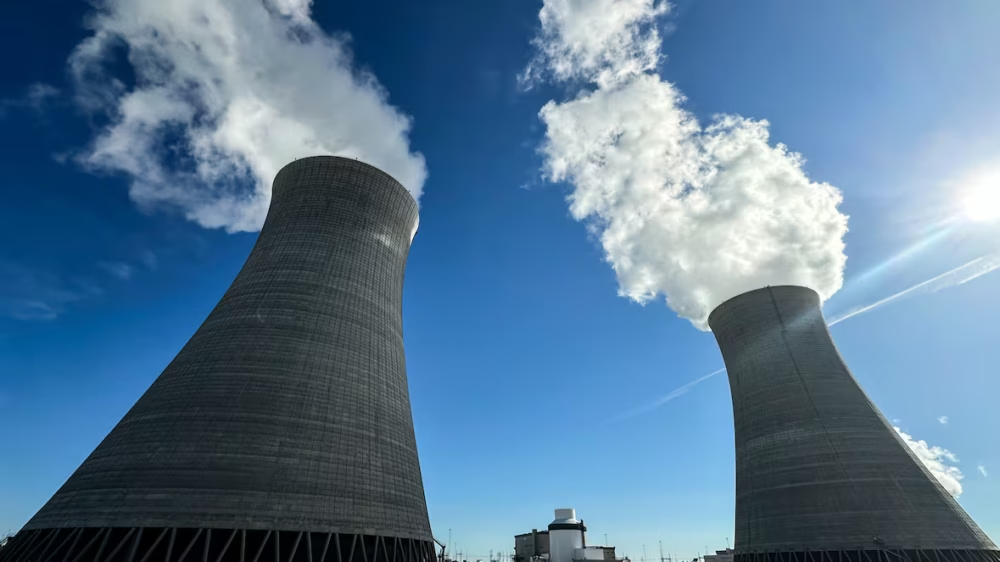

The U.S. Department of Energy has launched a new program aimed at quickly increasing nuclear power output by upgrading existing reactors, restarting dormant plants and finishing stalled projects.
The initiative, called the Utility Power Reactor Incremental Scaling Effort, or UPRISE, targets near-term electricity gains as demand rises across the country.
Additionally, the program will be managed by Idaho National Laboratory and will focus on expanding output from operating nuclear facilities. Officials say UPRISE aims to add 2.5 gigawatts of nuclear capacity by 2027 and 5 gigawatts by 2029.
Meanwhile, nuclear energy already supplies about one-fifth of U.S. electricity and remains a major source of carbon-free power. Instead of relying on new builds, the DOE will prioritize upgrades to existing infrastructure to speed up deployment timelines.
However, constructing new nuclear plants can take years or decades, making upgrades a faster option for increasing supply. The department said the program will expand capacity by boosting reactor output, restarting closed facilities and completing partially built projects.
Additionally, power uprates will serve as a central tool in the initiative’s strategy. These upgrades allow reactors to generate more electricity than originally licensed, within regulatory safety limits.
The U.S. Nuclear Regulatory Commission recognizes three types of uprates based on their scale. Measurement uncertainty recapture uprates increase output by less than 2 per cent.
Meanwhile, stretch uprates typically raise capacity between 2 and 7 per cent. Extended uprates can deliver gains of up to 20 per cent in some cases.
Consequently, these upgrades can unlock additional power without requiring entirely new facilities.
Read more: Radon: the silent, invisible and odourless killer
Read more: NASA reauthorization bill could unlock commercial space nuclear power
Financing remains a critical strategic piece
The DOE plans to collaborate with utilities to evaluate equipment, supply chains and investment economics for these projects. Additionally, the agency will support research aimed at simplifying regulatory processes and improving nuclear fuel technologies.
Officials also plan to host “match-making” workshops later this year to connect reactor operators with large electricity users. Meanwhile, financing remains a critical piece of the strategy as projects move forward.
The federal government can access more than USD$289 billion in loan authority through its energy financing office. Additionally, it can cover up to 80 per cent of eligible project costs for nuclear uprates.
This financial backing could help utilities move forward on projects that might otherwise face funding challenges. UPRISE ties into a broader federal push to expand nuclear power across the United States.
In May 2025, President Donald Trump signed executive orders aimed at revitalizing the domestic nuclear industry. Those directives set a target of increasing U.S. nuclear capacity from about 100 gigawatts today to 400 gigawatts by 2050.
Additionally, the orders call for faster licensing approvals and expanded nuclear fuel supply chains. They also encourage the development of advanced reactors and the restart of previously closed plants.
In some cases, officials have promoted small modular reactors to support energy security and industrial growth. Meanwhile, DOE leadership has framed UPRISE as a turning point for the existing reactor fleet.
A senior nuclear energy official said the initiative aims to drive a resurgence by working closely with industry partners. Additionally, the program could help surpass earlier targets for domestic nuclear expansion set for the end of the decade.
Read more: Denison advances USD$600 million Phoenix uranium mine after board approval
Read more: NuScale Power expands Framatome partnership to supply SMR fuel globally
Nuclear plants generate continuous electricity
The renewed focus on nuclear energy reflects growing concerns about rising electricity demand. Power consumption is expected to increase significantly over the next decade due to several factors.
Additionally, advanced manufacturing, electrification and the rapid expansion of AI-driven data centers are placing pressure on the grid. Energy planners increasingly view nuclear power as a reliable solution for meeting this demand.
Unlike wind and solar, nuclear plants generate continuous electricity and can operate for decades. Meanwhile, many reactors can extend their lifespans to 80 years or longer with proper maintenance and upgrades.
Consequently, extending and upgrading existing plants offers a way to stabilize supply while reducing emissions. By focusing on restarts and uprates, UPRISE aims to add capacity faster than traditional construction timelines allow.
Additionally, the initiative lays groundwork for a broader expansion of nuclear energy in the years ahead.
.