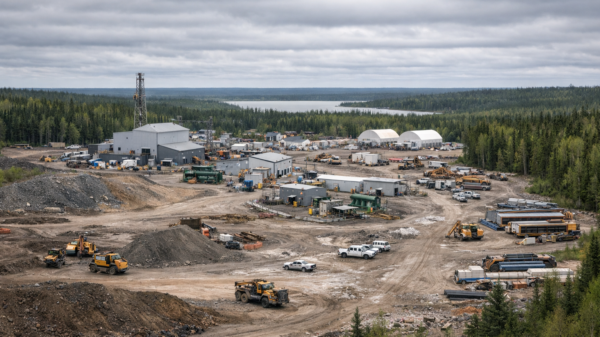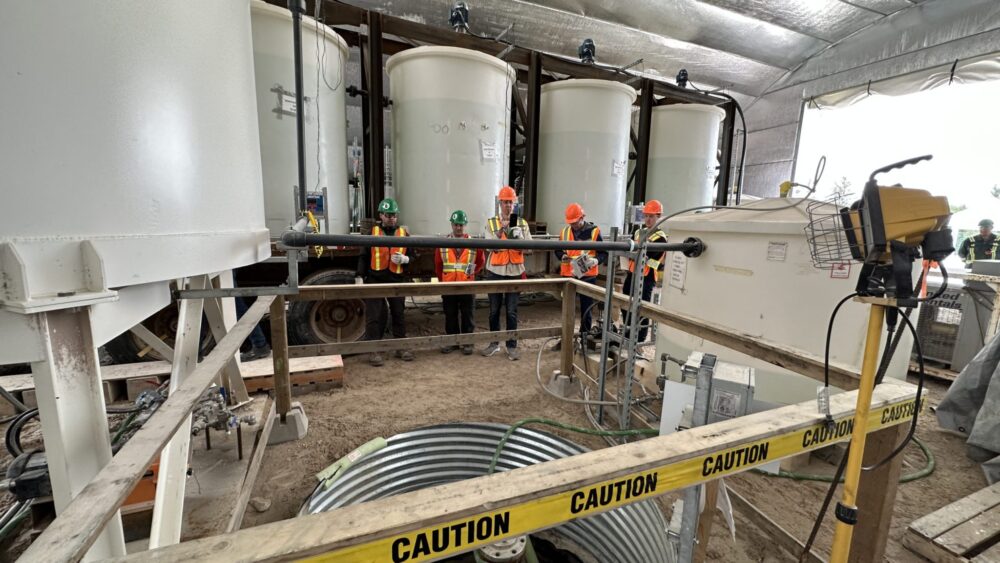

Denison Mines Corp. (TSE: DML) (NYSE American: DNN) is ready to approve construction of its proposed Phoenix in-situ recovery uranium mine in northern Saskatchewan, pending final federal permits, after a year of regulatory and engineering progress that has positioned the project for a rapid build.
On Friday, the company said the Phoenix project could reach a final investment decision early in 2026, assuming approvals arrive as expected in the first quarter. Consequently, construction could begin shortly afterward, keeping first uranium production targeted for mid-2028.
Denison described Phoenix as construction-ready following extensive planning, procurement, and detailed engineering work completed through 2025. Additionally, the company confirmed the project carries a two-year construction timeline, unchanged from earlier plans.
Management framed the coming months as a turning point for the company. Furthermore, executives said the conclusion of Canada’s federal regulatory hearing removes the last major process step before a construction decision.
The Canadian Nuclear Safety Commission completed its two-part public hearing on December 11, 2025. Subsequently, the regulator is expected to issue a decision covering the environmental assessment and the licence to prepare the site and construct the mine.
Provincial approvals are already in place. In addition, Saskatchewan granted environmental assessment approval in August and recently authorized limited early earthworks, including vegetation removal and site drainage.
Denison said these steps allow the company to move quickly once federal approval arrives. Meanwhile, procurement for major 2026 construction contracts is nearly finished, with awards expected early in the year.
The company said it expects to finalize a detailed, task-level construction schedule shortly after contractors are onboarded. Consequently, site mobilization could follow almost immediately.
Read more: Denison Mines announces joint exploration venture with Cosa Resources
Read more: Russia shuts off uranium supply to United States
Engineering work is largely complete
Long-lead equipment deliveries remain on schedule. Additionally, electrical infrastructure, including transformers, high-voltage equipment, switchgear, and a substation e-house, is already progressing through manufacturing and shipment planning.
Engineering work is also largely complete. Denison said roughly 87 per cent of total engineering is finished, while 92 per cent of primary deliverables have been issued for construction.
Remaining engineering relates to later construction phases. However, the company expects to complete that work by the second quarter of 2026.
Alongside the readiness update, Denison released a revised initial capital cost estimate for Phoenix. Additionally, the company said the new figure reflects more precise costing based on firm procurement progress.
Post-FID initial capital costs are now estimated at about USD$600 million. Consequently, that represents a 20 per cent increase from the 2023 feasibility study when adjusted for inflation.
The earlier study estimated initial capital at USD$419.4 million in 2022 dollars. Furthermore, inflation alone lifted that figure to about USD$500.5 million in 2026 dollars.
Denison attributed the remaining increase to refined design choices, higher construction costs, and improved cost certainty. However, management emphasized that the revised figure now serves as a firm control budget.
About 75 per cent of equipment and materials costs are supported by committed contracts or active bid evaluations. Additionally, roughly half of construction costs are backed by bids under evaluation or final negotiation.
The updated estimate includes about USD$65 million in contingency and owner reserves. Consequently, that represents approximately 12.5 per cent of direct and indirect project costs.
One notable design change involves the wellfield layout. In addition, Denison plans to install large-diameter wells across the Phase 1 mining area.
Read more: Cosa Resources advances joint venture uranium projects with Denison backing
Read more: Energy Fuels raises uranium sales outlook as nuclear stocks cool
Phoenix expected to reach production by end of decade
Management said the change increases upfront capital requirements. Furthermore, the company expects it to improve operational flexibility and help maintain targeted production rates.
Denison also clarified how much spending has already occurred. The company has incurred USD$47 million in pre-FID costs since November 30, 2025. The company also expects another USD$53 million in pre-FID spending after that date. Consequently, total pre-FID expenditures since the 2023 study should reach about USD$100 million.
That figure exceeds the USD$67.4 million pre-FID estimate in the earlier feasibility study. However, management said the additional spending accelerated readiness and reduced future execution risk.
The company expects construction will start 24 months once it begins. Meanwhile, the company said meeting the first-quarter 2026 start window keeps mid-2028 production achievable. Denison emphasized its financial position as a key advantage. As of September 30, 2025, the company reported more than USD$700 million in cash, physical uranium, and investments.
Management said that balance sheet strength allows Phoenix to be built without immediate financing pressure. Additionally, it provides flexibility if market conditions shift during construction.
The company described Phoenix as one of the few new uranium mines globally expected to reach production before the end of the decade. Consequently, it could enter the market as nuclear demand rises. Executives pointed to expanding nuclear power adoption worldwide. Furthermore, they said utilities are seeking reliable, long-term uranium supply from stable jurisdictions.
Denison also positioned Phoenix as a strategic Canadian project. In addition, management said the mine aligns with national goals to develop environmentally responsible resource projects.
Read more: The year 2025 in review: A Mugglehead roundup
Read more: Alarming report finds that 18% of Canadian homes have unsafe levels of radon
Phoenix still requires environmental oversight
Phoenix would be the first new large-scale uranium mine built in Canada since Cigar Lake. Meanwhile, the project uses in-situ recovery, which avoids conventional open-pit or underground mining.
The company said this method reduces surface disturbance and tailings generation. However, Phoenix still requires rigorous environmental oversight due to its location and regulatory framework.
Economic projections remain strong despite higher capital costs. When using the same base-case uranium pricing methodology as the 2023 study, the project’s after-tax net present value remains largely unchanged.
Denison said modestly higher uranium price assumptions since mid-2023 offset the capital increase. Consequently, overall project economics held steady. The base-case adjusted after-tax net present value to initial capital ratio stands at about 2.6 to 1. Additionally, the project continues to show a high internal rate of return.
Management said that after the permits are finalized, the metrics will support a positive investment decision once permits are finalized. Furthermore, they described the remaining approval as the final gating item.
The federal licence decision now represents the primary near-term catalyst. Subsequently, Denison expects to formally approve construction and transition Phoenix into execution mode. The company said early 2026 could mark the start of a new operational chapter. Meanwhile, investors are watching closely for confirmation that construction can begin on schedule.
Denison said that it does not expect any other revisions to the USD$600 million capital estimate before construction starts. The company says the result is a reduction in cust uncertainty.
Attention now shifts to regulatory timing and contractor mobilization. Additionally, market participants continue to monitor uranium prices as the global nuclear buildout accelerates.
.