
Cosa Resources Corp. (CVE: COSA) (OTCMRKTS: COSAF) has received approval to move ahead with new exploration programs at two uranium-focused projects in northern Saskatchewan, positioning the junior miner for an active 2026 drilling season.
Both projects operate as joint ventures between Cosa and Denison Mines Corp. (TSE: DML) (NYSE American: DNN). Cosa serves as the operator and holds a 70 per cent interest, while Denison retains the remaining 30 per cent stake. The company announced the approval on Wednesday.
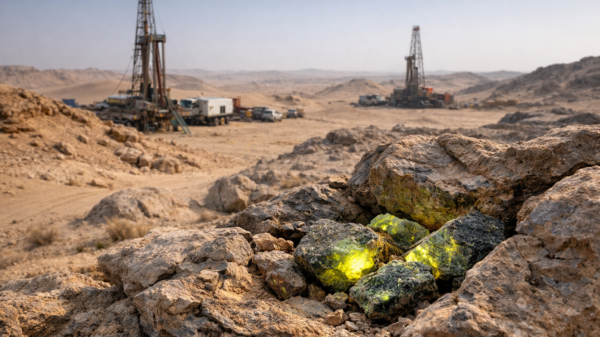
The Darby and Murphy Lake North projects are located in the eastern Athabasca Basin, one of the world’s most productive uranium regions. Additionally, the properties sit near major discoveries, including Cameco Corporation‘s (NYSE: CCJ) (TSE: CCO) Cigar Lake mine and IsoEnergy Ltd‘s (TSE: ISO) (OTCMKTS: ISENF) Hurricane deposit.
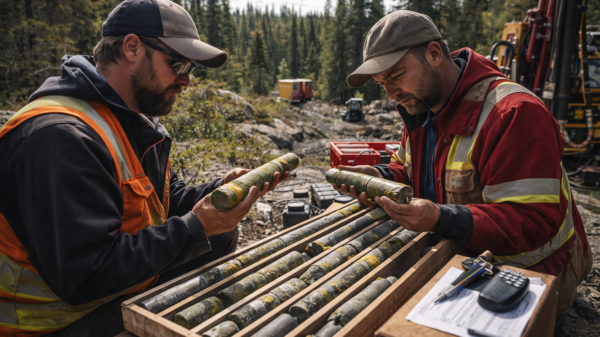
Approved plans call for winter and summer drilling at both sites throughout 2026. Furthermore, the program includes a large-scale ground geophysical survey at Murphy Lake North designed to refine additional drill targets.
Company leadership says the timing aligns well with a strengthened balance sheet. Recently, Cosa closed an oversubscribed CAD$7.5 million private placement that attracted significant insider participation, including investment from Denison. Consequently, the company enters the coming year with ample funding for aggressive exploration.
Management described the upcoming campaign as the strongest in Cosa’s history. In addition, executives credited Denison’s ongoing technical and financial backing for advancing both joint venture properties.
At the Darby project, winter drilling will focus on revisiting earlier drill holes that returned promising signs of uranium systems.
Read more: Denison Mines announces joint exploration venture with Cosa Resources
Read more: Russia shuts off uranium supply to United States
Drilling at Darby to start in January
Meanwhile, drilling at Murphy Lake North will initially concentrate on the Cyclone trend. Summer drilling in 2025 intersected extensive zones of structural disruption and alteration across a two-kilometre stretch. These features appeared alongside graphitic basement faults, a key ingredient in Athabasca uranium discoveries.
Winter drilling at Murphy Lake North will test areas that cannot be accessed during warmer months. Subsequently, the company has planned to drill additional holes in the summer once new geophysical data becomes available.
The company also plans to conduct a direct current resistivity survey across much of Murphy Lake North. This technique measures changes in electrical resistance underground. Additionally, it can reveal zones of alteration or faulting in sandstone, as well as basement features missed by older magnetic surveys.
Exploration managers believe this survey could unlock new shallow targets along one of the basin’s most prospective structural corridors. Furthermore, the work aims to expand the inventory of drill-ready targets beyond those already identified.
Preparation work has already begun. Winter trail construction is underway, allowing crews to access remote drill sites safely. Drilling at Darby is expected to start in late January and run through early spring. However, operations will shift to Murphy Lake North later in the winter season.
Cosa has scheduled drilling to conclude by late March. Meanwhile, the company is starting the resistivity survey at Murphy Lake North in April.
Company officials say more detailed exploration updates will follow early in 2026. Additionally, the company will use results from both drilling and geophysics to guide subsequent exploration decisions across the joint venture portfolio.
The eastern Athabasca Basin remains a focal point for uranium exploration as nuclear power regains global attention.
.