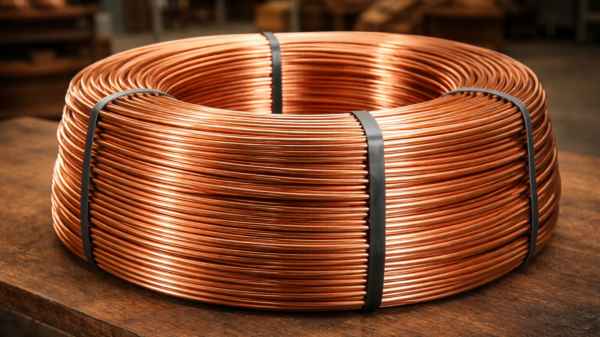

Copper prices surged toward a record as traders reacted to tightening supply signals and a broader risk on mood across markets.
All base metals advanced on Monday as Asian equities rose to record levels, driven by strong technology stocks. The rally reflected improving investor appetite for riskier assets after months of cautious positioning.
Benchmark copper futures climbed about 3 per cent in London, nearing last week’s peak just below USD$13,000 a ton. Concerns over potential U.S. import tariffs pushed traders to accelerate shipments into the United States, tightening supply elsewhere.
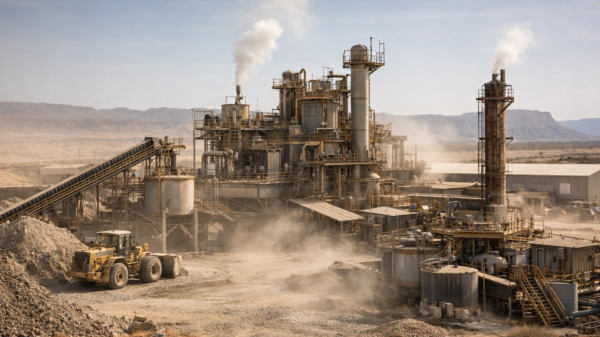
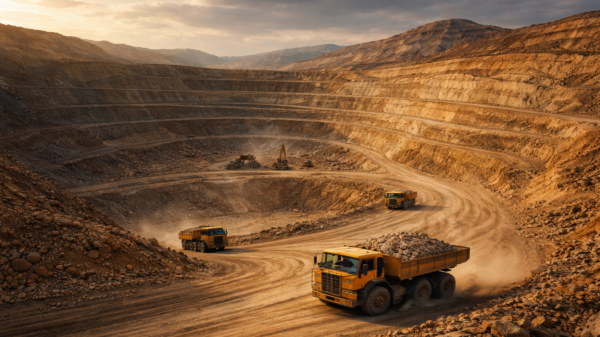
Additionally, the start of a strike at Chile’s Mantoverde mine renewed fears of production disruptions during rising global demand. Copper traded as high as USD$12,839 a ton on the London Metal Exchange before easing slightly in Asian hours.
Furthermore, markets assessed the wider implications of Washington’s weekend seizure of Venezuelan leader Nicolas Maduro. That move raised questions about future U.S. policy toward resource-rich nations central to economic and energy security. Copper remains critical for power grids, electric vehicles, and renewable infrastructure, alongside traditional construction uses.
“Overall supply shortfalls, coupled with regional dislocation caused by US tariffs, are propelling copper. The global copper market will see a shortage of more than 100,000 tons in 2026,” China Securities Co. analysts led by Wang Jiechao wrote in a note.
Consequently, prices jumped 42 per cent in 2025, marking copper’s strongest annual performance since 2009. Fears of future U.S. tariffs have also driven an expansion of exchange-tracked copper inventories inside the country. Meanwhile, the cash-to-three-month spread in London stayed in backwardation, signaling immediate supply tightness.
Backwardation is a market condition that occurs when a commodity’s spot price trades above its future prices, signaling tight near-term supply and strong immediate demand.
Read more: Codelco record copper premium sparks threats from Chinese buyers
Read more: Analysts forecast surge in copper consumption outside China by 2031
Supply disruptions played central role in 2025
Other metals followed copper higher, with aluminum rising as much as 1.8 per cent to USD$3,069 a ton. That marked aluminum’s highest level since April 2022, supported by constrained supply and long-term demand bets.
Elsewhere, iron ore prices edged up 0.3 per cent to USD$105.90 a ton in Singapore trading.
Copper prices moved sharply higher through 2025 as markets reacted to geopolitical risk, trade policy shifts, and persistent supply constraints. Early in the year, prices climbed as governments accelerated spending on power grids, electric vehicles, and renewable energy systems.
Additionally, investors increasingly treated copper as a strategic metal tied to national security rather than a simple industrial input. Supply disruptions played a central role throughout the year, particularly in Latin America, where labor disputes and permitting delays limited output.
Meanwhile, uncertainty around U.S. trade policy intensified after renewed discussions of import tariffs on critical materials. Those concerns encouraged traders to redirect shipments toward the United States, tightening availability in Europe and Asia.
Furthermore, conflicts and political instability in resource-rich regions added risk premiums to futures pricing. Markets also reacted to evolving U.S. policy toward Venezuela and other commodity producers with strained diplomatic relations.
Consequently, copper became more sensitive to headlines tied to sanctions, seizures, and strategic resource access. China’s role remained central, as policymakers signaled support for manufacturing and infrastructure despite broader economic slowdowns.
In addition, inventory levels at major exchanges fluctuated sharply, reinforcing short-term volatility.
By midyear, backwardation emerged in key contracts, reflecting immediate supply tightness. Copper ultimately finished 2025 up about 42 per cent, posting its strongest annual gain since 2009. That surge reflected the convergence of geopolitics, trade fragmentation, and long-term demand tied to electrification.
.