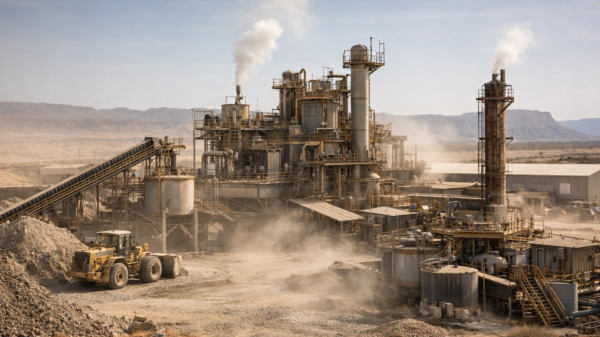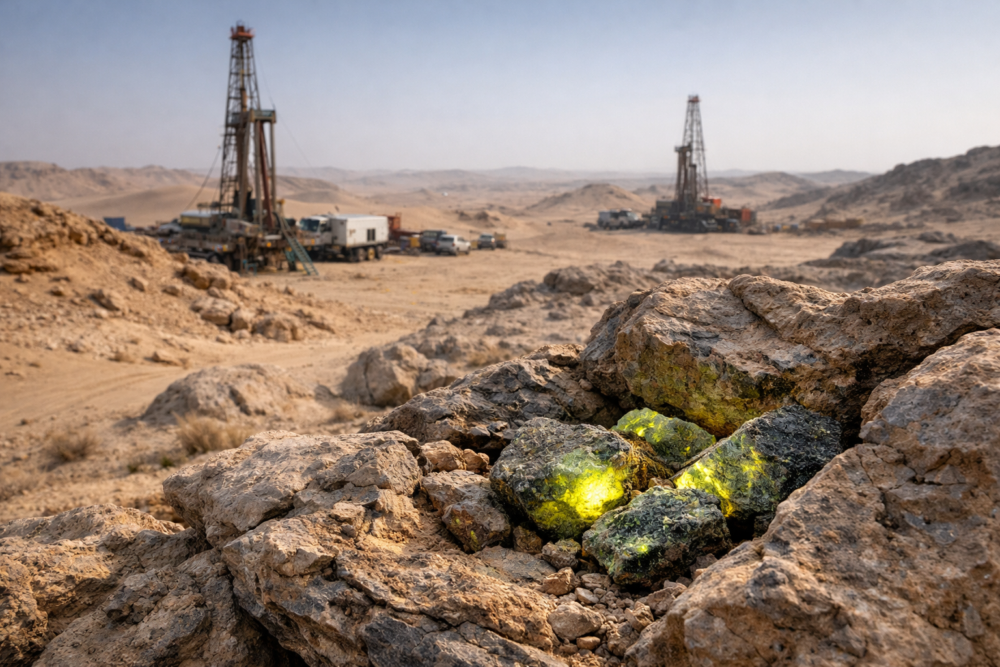

Chinese researchers have identified what may be one of the largest uranium deposits ever discovered beneath the Ordos Desert in Inner Mongolia, with estimates exceeding 30 million tons.
Announced on Friday, the find could significantly reshape global uranium supply while strengthening China’s long-term energy security strategy. Scientists located the deposit beneath a harsh landscape of sand, rock and extreme climate conditions.
Researchers said the scale of the discovery surprised even veteran geologists familiar with the mineral potential of northern China. Additionally, the discovery arrives as Beijing rapidly expands its nuclear energy program.
China currently operates dozens of nuclear reactors and continues building new facilities across the country. Meanwhile, officials are constructing eleven additional reactors to meet growing electricity demand.
Access to large domestic uranium reserves could help secure fuel supplies for decades. Consequently, the deposit may reduce China’s reliance on imported uranium from other producing countries.
Exploration teams used advanced geological modeling, remote sensing and deep subsurface drilling to identify the deposit. Furthermore, improved data analysis tools allowed researchers to interpret complex underground formations beneath the desert.
Geologists said the Ordos Basin has long attracted exploration interest because of its unique sedimentary structure. However, earlier surveys lacked the technological precision required to confirm deposits of this magnitude.
The Ordos Desert stretches across large sections of Inner Mongolia and neighboring provinces. Additionally, the basin already hosts significant coal and natural gas resources that support China’s industrial economy.
Uranium plays a central role in China’s evolving energy strategy because nuclear power produces electricity with far lower carbon emissions than coal. Consequently, the government views nuclear energy as essential for balancing economic growth and climate targets.
Read more: Denison advances USD$600 million Phoenix uranium mine after board approval
Read more: NASA reauthorization bill could unlock commercial space nuclear power
Global supply landscape could shift significantly
Energy planners increasingly treat uranium as a strategic resource tied to national security. Furthermore, reliable domestic supplies could stabilize fuel costs for China’s expanding reactor fleet.
Global uranium production currently concentrates in a handful of countries. Kazakhstan leads worldwide output, while Canada produces some of the highest-grade uranium ore.
Australia holds enormous reserves and operates several large deposits. Meanwhile, Namibia hosts multiple large-scale uranium mines supplying international markets. If China develops the Ordos deposit at scale, the global supply landscape could shift significantly. Consequently, uranium prices and international trade patterns may adjust depending on Beijing’s production strategy.
China currently imports uranium from producers across Central Asia, Africa and North America. Additionally, state-owned nuclear companies have invested heavily in overseas mining projects to secure long-term supply. Domestic production from the Ordos Basin could reduce that dependence. Furthermore, large reserves would strengthen China’s position in future energy negotiations.
Some analysts believe the deposit could support China’s nuclear fuel needs for generations. Meanwhile, other experts caution that extraction timelines and production costs remain uncertain. Mining companies must still evaluate the geological structure and economic feasibility of the deposit. Additionally, engineers must design infrastructure capable of operating in the desert’s extreme conditions.
Large-scale uranium mining also presents environmental challenges. Consequently, authorities will face scrutiny over how they manage water consumption and radioactive waste in an arid ecosystem. The Ordos region receives limited rainfall and already experiences water stress in some areas. Furthermore, mining operations require significant water for processing uranium ore.
Read more: Alarming report finds that 18% of Canadian homes have unsafe levels of radon
Read more: Radon: the silent, invisible and odourless killer
Beijing continues expanding renewable energy alongside nuclear power
Environmental experts warn that poorly managed extraction could threaten fragile desert habitats. However, Chinese regulators say modern mining standards can reduce environmental impacts through strict monitoring. Worker safety and radiation management will also become major priorities if the project advances. Additionally, the government must address potential concerns from nearby communities.
Despite these challenges, the discovery aligns with China’s broader energy transition strategy. Meanwhile, Beijing continues expanding renewable energy alongside nuclear power. China leads the world in solar and wind installation capacity. Furthermore, nuclear reactors provide stable baseload electricity that complements intermittent renewable generation.
Officials increasingly promote a diversified energy system combining renewables, nuclear power and strategic mineral development. Consequently, domestic uranium reserves would fit directly into that long-term plan. Energy analysts say the Ordos discovery may influence global uranium markets in the coming decades. Additionally, China’s approach to developing the deposit could shape future geopolitical competition around nuclear fuel supplies.
Governments worldwide have begun reconsidering nuclear power as they pursue lower-carbon energy systems. Meanwhile, rising electricity demand from industry and digital infrastructure continues to drive interest in reliable baseload generation. Large new uranium deposits therefore attract intense attention from energy planners and commodity markets. Consequently, the Ordos Basin discovery may become one of the most closely watched resource developments in the global nuclear sector.