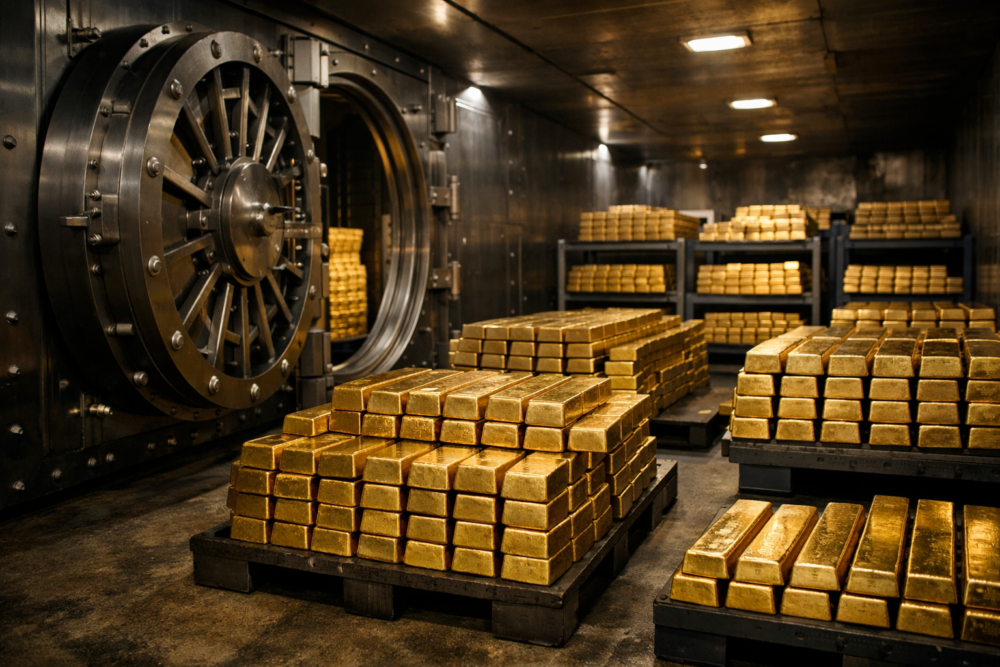

Central bank gold buying slowed sharply in January, even as more monetary authorities moved to increase their exposure to the metal.
Central banks added a net 5 tonnes of gold during the month, according to new data from the World Gold Council. That pace fell well below the 12-month average of 27 tonnes.
However, several countries continued accumulating bullion despite volatile prices and a quieter trading period during the holidays. Uzbekistan led purchases in January, adding nine tonnes to its reserves. The buying extended a streak that began in October.
The purchases lifted Uzbekistan’s total gold reserves to 399 tonnes. Consequently, gold now represents about 86 per cent of the country’s reserves. That share stood at roughly 57 per cent in 2020, illustrating a steady shift toward bullion holdings.
Meanwhile, Malaysia’s central bank returned to the gold market after several years on the sidelines. Bank Negara Malaysia bought three tonnes in January. The purchase marked the institution’s first increase in gold reserves since 2018. Additionally, the move raised its holdings to 42 tonnes.
Gold now accounts for roughly 5 per cent of Malaysia’s total reserves. Several other central banks also added modest amounts during the month. The Czech Republic and Indonesia each purchased two tonnes.
Meanwhile, China and Serbia both increased reserves by one tonne. China has now expanded its gold reserves for 15 consecutive months. Consequently, bullion now represents nearly 10 per cent of its total reserves.
Read more: NevGold expands high grade antimony discovery at Nevada’s Limousine Butte Project
Read more: NevGold expands Bullet Zone discovery as drilling confirms oxide gold-antimony system
Central bank demand has expanded in recent years
However, some central banks moved in the opposite direction during the same period. Russia recorded the largest net sale in January, reducing its gold reserves by nine tonnes. Meanwhile, Bulgaria’s central bank sold two tonnes as part of the country’s transition to the euro.
The Bulgarian National Bank transferred that gold to the European Central Bank after Bulgaria adopted the euro on Jan. 1, 2026. Additionally, Kazakhstan and the Kyrgyz Republic each reduced their reserves by one tonne.
The World Gold Council noted that central bank demand has expanded geographically in recent years. Meanwhile, the Bank of Korea signalled a new approach to gold exposure.
South Korea’s central bank said it plans to include overseas-listed physical gold exchange-traded funds in its reserve portfolio starting in the first quarter of 2026. The Bank of Korea cited liquidity and ease of trading as advantages compared with holding physical bullion.
The institution currently holds 104 tonnes of physical gold. That represents roughly 4 per cent of its reserves. Furthermore, the move would mark its first gold-related investment since 2013.
The World Gold Council said central banks rarely access gold through ETFs. None of the central banks surveyed in its 2025 reserve survey reported using ETFs to buy gold. However, analysts expect continued central bank interest in bullion.
Geopolitical tensions and shifting global alliances have pushed many countries to diversify reserves since 2022. Additionally, tensions between the United States and Iran could influence gold demand in the coming weeks.
.