
Canada will allow up to 24,500 electric vehicles from China to enter the country at a sharply reduced tariff rate over the next six months. The decision opens a narrow path back into the Canadian market for Chinese automakers after last year’s steep trade restrictions effectively shut them out.
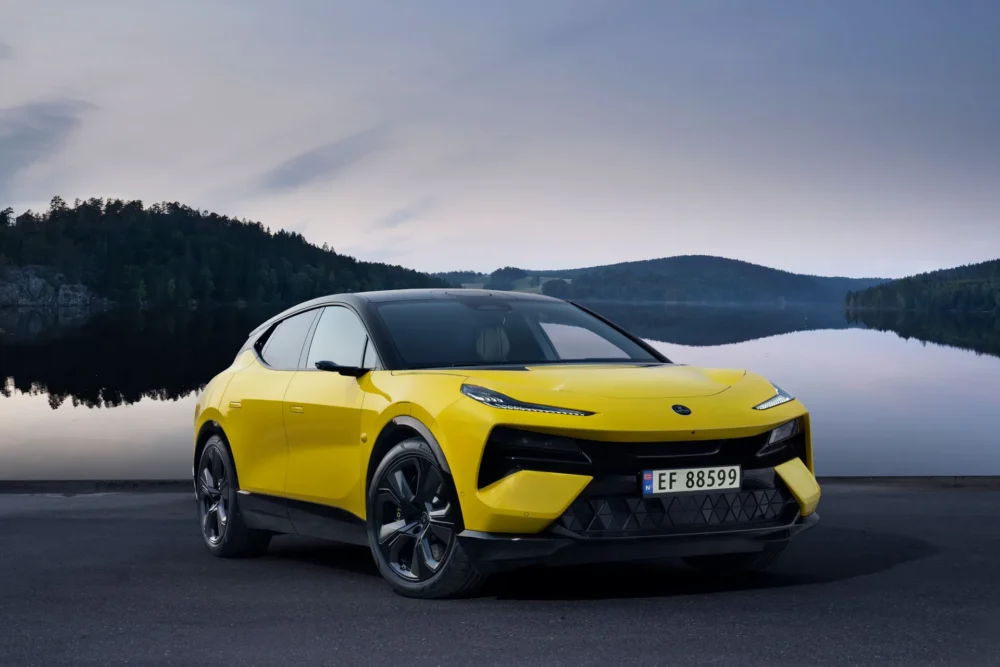
Lotus has already moved to seize that opportunity. The company plans to become the first Chinese brand to ship vehicles under the new quota system. Chief executive Feng Qingfeng told Chinese media that the Canadian market represents a rare opening the company intends to pursue quickly.
He said the firm must take advantage of the early entry because the Canadian market presents valuable growth potential. Feng also suggested that sales in Canada could offset some of the company’s recent losses in the Middle East.
However, the company faces headwinds in that region due to escalating geopolitical tensions. Feng said the brand has temporarily halted some vehicle exports to Middle Eastern markets.
Meanwhile, Lotus has begun shifting its focus toward Canada. The Geely owned automaker already operates six dealerships across the country.
Additionally, Feng said vehicle production is already underway to support the Canadian rollout. He added that exports could begin immediately once Ottawa finalizes detailed tariff implementation guidelines.
Canada’s policy shift follows a recent agreement with China aimed at easing tensions over electric vehicle trade. Under the arrangement, Ottawa will issue permits allowing Chinese EV imports at a tariff rate of 6.1 per cent.
However, the reduced rate applies only to a limited number of vehicles. The Canadian government will distribute the import permits on a first come, first served basis.
Read more: Pony AI begins mass production of driverless robotaxis with Toyota backing
Read more: CATL to launch sodium-ion EV batteries this year as cold weather breakthrough nears
Canada imposed EV tariff in 2024
Between March 1 and Aug. 31, authorities will allow up to 24,500 vehicles to enter the market under the reduced tariff. Subsequently, the same quota will apply for the following six month period ending Feb. 28 next year.
In total, the agreement permits up to 49,000 Chinese electric vehicles annually at the lower tariff rate. Consequently, any vehicles beyond that limit will face the full 100 per cent import tariff.
Canada originally introduced that steep tariff in 2024 after following similar trade measures adopted by the United States. The policy effectively halted the sale of Chinese EVs in the Canadian market.
However, the new agreement partially reverses those restrictions while keeping strict limits on import volumes. The quota of 49,000 vehicles represents less than three per cent of Canada’s annual new vehicle sales.
Meanwhile, Canadian officials believe the policy could encourage new investment in domestic manufacturing. Government statements suggest the agreement may prompt Chinese companies to form joint ventures with Canadian partners.
Additionally, policymakers hope those partnerships will strengthen Canada’s growing electric vehicle supply chain. Officials also say new investments could support job creation in the country’s automotive sector.
Lotus plans to enter the market as those regulatory changes take effect. The brand recently unveiled its new Lotus Tuned Specification standard, which defines a proprietary engineering tuning approach derived from motorsport technology.
The first model to feature the standard is the plug in hybrid Lotus For Me. The vehicle derives from the company’s Eletre platform.
Additionally, the model uses a 2.0-litre turbocharged engine delivering 205 kilowatts. The engine comes from Horse Powertrain and operates alongside an electric drivetrain.
Read more: Nio and CATL deepen battery swap alliance as sodium-ion EV rollout nears
Read more: Albemarle sells refining catalyst units as lithium supply glut persists
Canada’s quota system could expand in coming years
Lotus plans to launch the For Me model in China at the end of March. Subsequently, the company expects to introduce the vehicle in European markets later this year.
Meanwhile, Canada could become one of the brand’s earliest export destinations under the new tariff framework. Feng said the company intends to move quickly once the government publishes final implementation rules.
Canada’s quota system will expand gradually in the coming years. Additionally, officials expect the import allowance to increase to roughly 70,000 vehicles annually by 2030.
The policy applies to battery electric vehicles, hybrids and plug in hybrids produced in China. Consequently, several Chinese automakers may attempt to secure import permits before the quota fills.
Canada’s decision to partially reopen its market to Chinese electric vehicles also reflects a wider set of geopolitical and economic calculations.
One major factor involves agricultural trade between the two countries. In recent years, China imposed steep tariffs on several Canadian exports, including canola, peas and pork. Those restrictions followed political tensions and trade disputes that escalated after Canada adopted harsh tariffs on Chinese electric vehicles in 2024.
Consequently, Canadian farm exports to China dropped sharply. The new arrangement effectively trades limited EV access for relief in the agricultural sector. Under the emerging framework, China has reduced tariffs on Canadian canola shipments that previously faced duties exceeding 80 per cent.
Additionally, restoring access to the Chinese market carries significant economic importance for Canada’s farming sector. Canola represents one of the country’s most valuable agricultural exports and supports thousands of producers across the Prairie provinces.
Read more: BMW unveils Vision Neue Klasse X: A glimpse into the future of electric vehicles
Read more: Chinese autonomous vehicle firms race ahead as Gulf states embrace robotaxis
Quota system is a mechanism for controlling China relationship
However, agriculture is only one part of the strategic picture. Canada also faces growing pressure to diversify its global trade relationships. According to Statistics Canada, the United States currently absorbs roughly three quarters of Canadian exports, creating significant economic dependence.
Meanwhile, relations between Ottawa and Washington have experienced periodic tensions over tariffs, industrial subsidies and trade policies. Several recent U.S. protectionist measures targeting foreign manufacturing have also raised concerns among Canadian policymakers.
Consequently, Canadian officials have explored ways to broaden the country’s commercial ties with other major economies. Reopening limited access to Chinese electric vehicles represents one step toward maintaining economic engagement with the world’s second largest economy.
“It’s a huge declaration of realignment in Canada’s economic relations,” said Edward Alden, who studies trade issues as senior fellow at the Council on Foreign Relations.
“The economic threat from the United States is now perceived by Canadians as far bigger than the economic threat from China. So this is a big deal.’’
Additionally, the quota system provides Ottawa with a controlled mechanism for managing that relationship. By capping imports at 49,000 vehicles annually, the policy prevents a surge of Chinese vehicles that could disrupt domestic markets.
Meanwhile, Canadian officials also hope the agreement will attract investment in the country’s growing electric vehicle supply chain. Government statements suggest Chinese automakers could pursue joint ventures with Canadian partners if the market begins to reopen.
Canada holds significant deposits of critical minerals used in electric vehicle batteries, including lithium, nickel, cobalt and graphite. Consequently, policymakers believe Chinese manufacturers may view Canada as an attractive location for battery production or vehicle assembly.
Read more: Mercedes-Benz experiments with robots for unskilled manufacturing labour
Read more: Apple ejects out of autonomous car market, to cut hundreds of employees
The policy may influence EV affordability
Furthermore, such partnerships could support Ottawa’s broader strategy of building a domestic EV manufacturing ecosystem. Canada has already secured several major battery investments from international automakers and technology firms.
However, policymakers also recognize that Chinese companies dominate large segments of the global EV supply chain. Allowing limited market access could encourage collaboration that accelerates domestic industrial development.
Additionally, the policy may influence electric vehicle affordability in Canada. Chinese manufacturers currently produce some of the world’s lowest cost EVs due to their large manufacturing scale and integrated supply chains.
Consequently, limited imports could increase competition in Canada’s electric vehicle market. Greater competition may help reduce prices and expand consumer access to EV technology.
Meanwhile, the strict quota ensures Chinese vehicles remain a relatively small share of the overall market. Even at the full annual limit, Chinese imports would account for less than three per cent of new vehicle sales in Canada.
Additionally, the government plans to gradually expand the quota in future years. Officials have suggested the annual allowance could increase to roughly 70,000 vehicles by the end of the decade.
However, any imports beyond the quota would immediately face the full 100 per cent tariff again. That structure allows Canada to maintain protection for domestic manufacturing while still reopening a narrow channel for trade with China.
.