
Borealis Mining Company Limited (CVE: BOGO) (FSE: L4B0) moved to bolster its balance sheet after unveiling a bought deal private placement aimed at accelerating work at its Nevada gold assets.
The company said it has agreed to a CAD$20 million bought deal offering of common shares. Under the terms, the company will issue about 13.34 million shares. The shares are priced at CAD$1.50 each through an underwriting syndicate.
Additionally, the underwriters hold an option to buy up to two million more shares. That option can be exercised in whole or in part up to 48 hours before closing. Borealis said it plans to use the net proceeds to advance its gold projects in Nevada. The financing comes as the company shifts from development toward early-stage production.
However, the announcement weighed on the stock during Tuesday’s trading session. Shares slipped 9.7 per cent, or CAD$0.16, to close at CAD$1.49. The stock has traded between CAD$0.49 and CAD$2.04 over the past year.
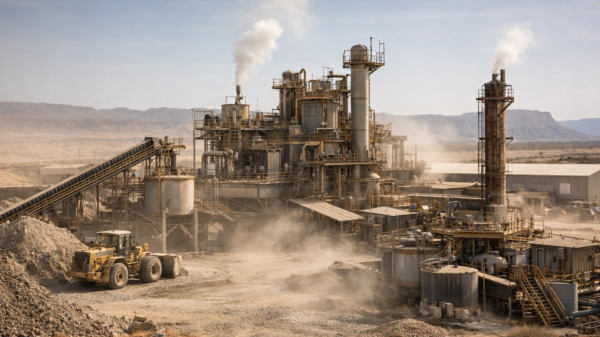
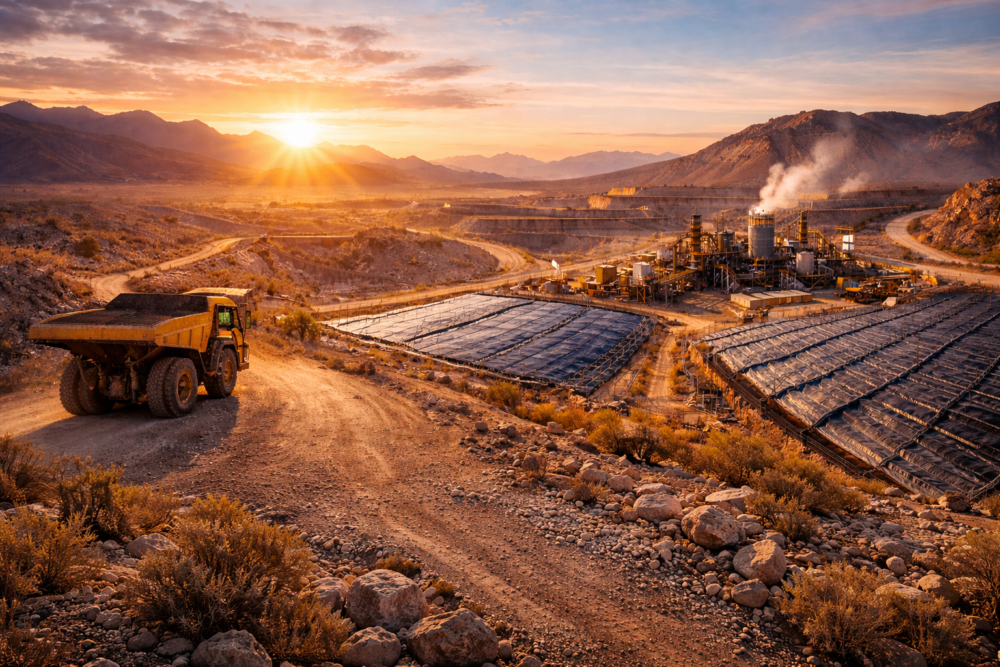
Borealis operates as a gold mining and exploration company focused on Nevada. Its main assets include the Borealis Mine and the Sandman project. Both projects sit in established mining jurisdictions with existing infrastructure. Additionally, Borealis describes the Borealis Mine as a fully permitted operation. The site includes active heap leach pads, an ADR facility, and supporting infrastructure.
The Borealis property spans about 16,300 acres across unpatented mining claims. It also includes an unpatented mill site claim covering roughly five acres. The company believes the surrounding area remains prospective for further gold mineralization.
Read more: NevGold expands Limo Butte footprint by staking 90 promising antimony-gold claims
Read more: NevGold’s latest discovery represents near-term antimony production potential
Company resumed drilling efforts in 2024 and 2025
Historically, the Borealis Mine produced more than 600,000 ounces of gold. Production came from an open-pit heap leach operation that operated for several years.
However, Borealis has said the property remains under-explored by modern standards. The site saw limited drilling activity after 2011. Subsequently, the company resumed drilling efforts during 2024 and 2025. Those programs aimed to confirm historic data and identify additional mineralized zones.
Meanwhile, the Sandman project represents Borealis’ other key growth asset. The company acquired the project through its takeover of Gold Bull Resources. Sandman hosts a NI 43-101 compliant resource and a preliminary economic assessment from 2023. That study pointed to favorable project economics at the time of publication. Additionally, Borealis noted that higher gold prices could improve those projections.
During the first quarter of fiscal 2026, Borealis reached a production milestone. The company poured its first gold from historic stockpiles at the Borealis Mine. The pour produced 956.8 troy ounces of dore containing gold and silver. Consequently, the company reported about 406.9 payable gold ounces.
It also recovered approximately 263.7 payable silver ounces from the material.
Furthermore, Borealis continued preparations to restart open-pit mining and blasting. The company expects those activities to begin in early 2026. However, management cautioned that the restart decision lacks a feasibility study. The company acknowledged that economic viability has not yet been demonstrated.
Meanwhile, Borealis’ financing push reflects a broader reality: Nevada remains one of the most attractive jurisdictions for gold producers in North America.
Read more: NevGold delivers major growth at Idaho gold project
Read more: GoldMining chooses to retain its NevGold shares for next 18 months
Nevada hosts several distinct gold options
Nevada consistently ranks among the top global mining jurisdictions due to permitting clarity, infrastructure, and skilled labour. The state hosts several distinct gold belts, each with its own geology and operating profile. Additionally, long production histories have reduced technical uncertainty across many districts.
The Carlin Trend stands as Nevada’s most prolific gold-producing region. It is known for large, disseminated deposits hosted in sedimentary rocks. Barrick Mining Corp (TSE: ABX) (NYSE: B) (ETR: ABR0) operates several mines along this trend. The company benefits from scale, shared infrastructure, and decades of geological data. Furthermore, Carlin-style systems allow for bulk mining with relatively predictable metallurgy.
The Cortez Trend offers a mix of oxide and sulphide deposits. This belt has delivered multiple high-grade discoveries over the past two decades. Nevada Gold Mines, a joint venture between Newmont Corporation (TSE: NGT) (NYSE: NEM) (FRA: NMM), controls much of the trend. Additionally, the region supports both open-pit and underground operations.
Existing processing facilities lower capital barriers for nearby projects. Walker Lane represents a geologically different opportunity set. The trend is known for structurally controlled, often higher-grade gold systems. NevGold Corp (CVE: NAU) (OTCMKTS: NAUFF) (FRA: 5E50) is active within this belt. The company has focused on projects with shallow oxide mineralization. Consequently, its assets may be suited to heap leach processing.
.
NevGold Corp is a sponsor of Mugglehead news coverage
.