
Shira Kupperman Boehler has transformed her lung cancer diagnosis into a mission to save lives.
The New Orleans native and Nashville resident had a routine full-body MRI last fall that revealed a mass in her right lung.
As a 44-year-old non-smoking mother of four and dedicated runner, she showed no symptoms at all. A follow-up low-dose CT scan, recommended by knowledgeable family and friends after the MRI, determined that the finding was lung cancer. Surgeons successfully removed the tumour in October.
Boehler is now sharing her story in the new book titled One Scan Saved My Life. The memoir recounts her unexpected battle and pushes for major updates to lung cancer screening guidelines, primarily to expand eligibility criteria.
Boehler advocates for the importance of early detection. Current guidelines restrict low-dose CT scans mainly to adults over 50 with heavy smoking histories. Yet, more than 20 per cent of lung cancer cases strike never-smokers and over two-thirds of patients fall outside the screening criteria.
She held a book signing at Hotel St. Vincent in New Orleans on Tuesday, Mar. 31. Attendees purchased copies, and all proceeds support her non-profit Cancer Doesn’t Care. The foundation funds scans for patients who cannot afford them and backs vital research.
Boehler feels particular concern about lung cancer in women. The disease kills more young, healthy women than breast, ovarian and colon cancers combined. Rates continue to rise among never-smokers, especially women, while screening access lags far behind.
“Anyone can get lung cancer,” she said in a recent interview with CNN. “It’s not a smoker’s disease, it’s not a deserved disease, it’s out there and it’s affecting people of all ages.”
Read more: Breath Diagnostics advances pre-op pneumonia screening with FDA breakthrough designation
Oncology organizations condemn ‘misinformation’ about screening dangers
Boehler’s advocacy for the benefits of low-dose CT scans is shared by a group of leading oncology organizations.
The American College of Radiology, Society of Thoracic Surgeons, and American Society for Radiation Oncology recently joined forces to push back against what they say is misinformation regarding this lung cancer screening technology.
They criticize studies that they say are flawed, inflate false positive rates and overstate radiation risks. This group says exaggerated claims have been discouraging both doctors and patients from using a proven lifesaving tool.
The organizations stress that low-dose CT remains the only screening method shown to cut lung cancer deaths, yet fewer than one in five eligible Americans actually receive it.
Emerging technologies are expanding options
Aside from the widely employed low-dose CT, researchers and companies have been developing other promising lung cancer screening technologies.
Breath Diagnostics is currently advancing OneBreath, a non-invasive breath test that analyzes exhaled volatile organic compounds to detect early cancer signals with high accuracy.
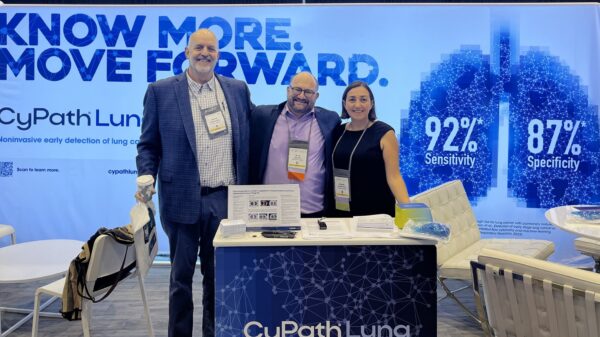
Furthermore, bioAffinity Technologies Inc (NASDAQ: BIAF) currently offers CyPath Lung, a sputum test that uses flow cytometry and artificial intelligence to identify malignancy in mucus samples collected at home.
Tools like these promise simpler, more accessible screening for women, never-smokers, and others who fall outside traditional guidelines.
They could and do complement low-dose CT scans and speed up progress toward catching the disease earlier for everyone.
Read more: Prestigious medtech intelligence firm recognizes Breath Diagnostics for innovation
Follow Rowan Dunne on LinkedIn
rowan@mugglehead.com