
China’s tight hold on rare earth processing and the permanent magnets that rely on them has left Western industries exposed. That vulnerability has driven efforts by companies and labs to create magnets that simply do not need those materials at all.
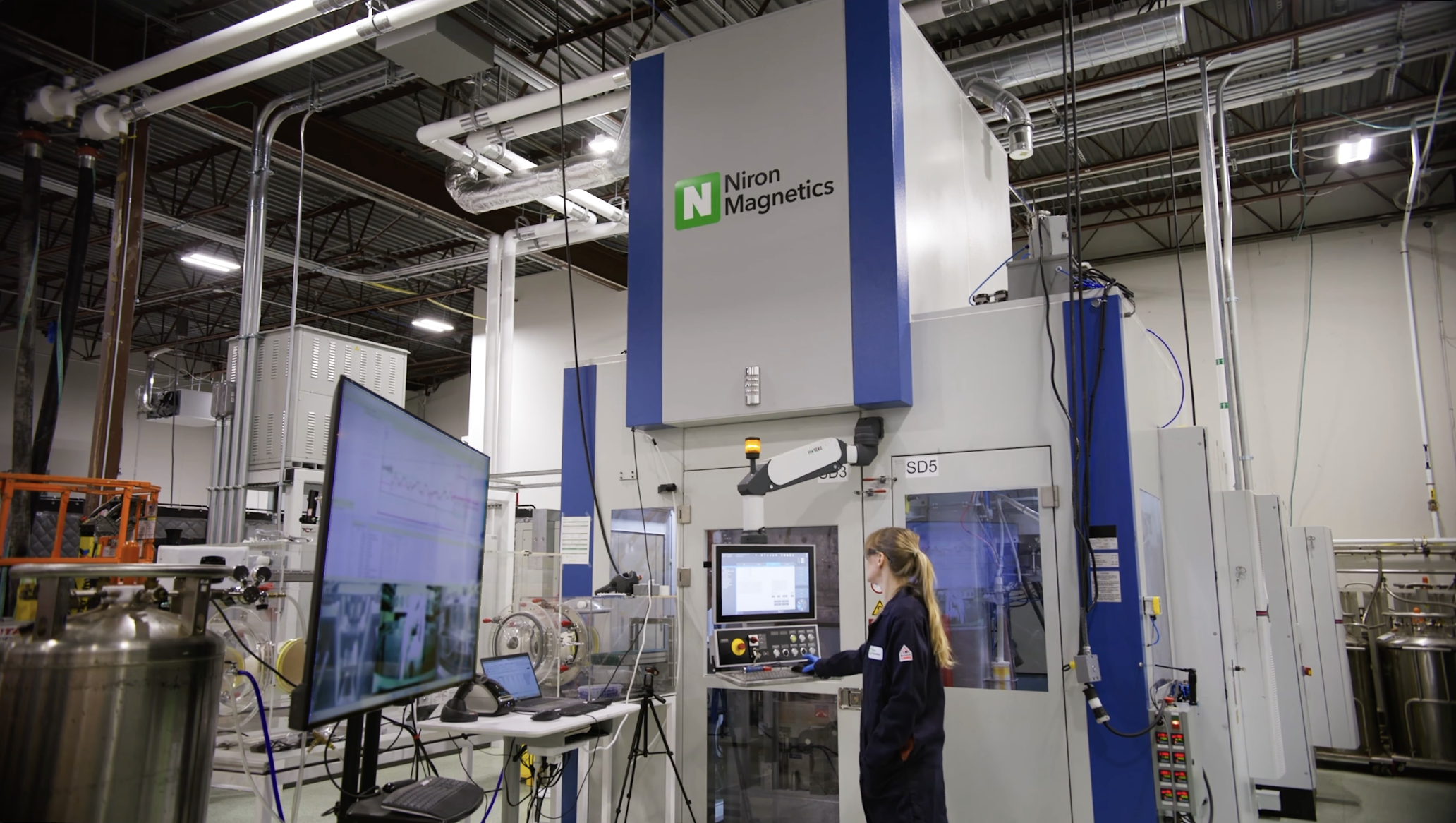
Niron Magnetics stands out among them. The Minneapolis-based firm has developed a high-performance magnet made from iron nitride, known as the Clean Earth magnet. These magnets offer a practical way for the United States and its allies to ease worries about supply disruptions while still meeting the demands of electric vehicles, industrial machines and everyday electronics.
In the latest step forward, Honda Motor Co Ltd‘s (OTCMKTS: HNDAF) investment arm has agreed to put an undisclosed sum into the company through its Honda Xcelerator Ventures programme. The funding will help Niron keep commercialising its tech and expand manufacturing.
“Most electric propulsion motors today use permanent magnets made from rare earth metals, which are subject to resource constraints and fluctuations in market conditions,” said Honda Executive Director Mahito Shikama in a press release. “Niron Magnetics is addressing these challenges, and Honda has high hopes for its potential.”
This announcement arrived on the same day as a ceremonial column-raising at Niron’s new site in Sartell, Minnesota. Officials and company leaders lifted the first steel column at the 287,000-square-foot plant. When it opens in 2027 the facility will produce up to 1,500 tons of magnets a year and create around 175 full-time jobs. It moves Niron well beyond its existing pilot plant in Minneapolis and other smaller infrastructure, giving the firm commercial-scale production capacity for the first time. The startup has secured US$300 million in loans for this complex.
Honda’s investment builds on earlier support that has helped Niron grow. Samsung Ventures led a US$25 million round in 2024 to explore uses in consumer electronics. Stellantis NV (NYSE: STLA) (ETR: 8TI) and General Motors Co (NYSE: GM) (ETR: 8GM) joined a US$33 million funding round in 2023, drawn by the chance to secure rare-earth-free magnets for electric vehicle motors and other components. Volvo ADR‘s (OTCMKTS: VLVLY) technology fund provided backing in 2021 with the same goal of finding more stable magnet supplies. Niron itself grew out of research at the University of Minnesota more than a decade ago and has steadily turned that science into a manufacturing business.
Few other groups match Niron’s progress. Materials Nexus in the UK has used AI to design a rare-earth-free magnet called MagNex, but it still lacks a working pilot plant or large factory. Ames National Laboratory, a US Department of Energy research centre in Iowa, is working with materials firm Powdermet on manganese-bismuth magnets. They remain at earlier development stages without major automotive funding or a commercial plant under construction.
Niron’s combination of a functioning pilot, a large plant under way and strong backing from car makers and tech firms currently sets it apart. Still, iron nitride is not a perfect swap. It resists demagnetisation less well than neodymium magnets and nobody has produced it in large quantities, yet. Companies want it mainly because it could cut reliance on China, not because it beats rare earth magnets on every performance measure.
Niron is building a plant in Sartell, Minnesota, that will make up to 1,500 tons a year of permanent magnets from iron and nitrogen, with production expected from 2027. The feedstocks are abundant and sourced in the United States, and ARPA-E, which funded Niron's pilot line,… pic.twitter.com/N3JDNOHVtp
— Winston (@ChurchillWw) September 11, 2026
Read more: Sarawak to employ satellite tech for mapping rare earth reserves
Follow Rowan Dunne on LinkedIn
rowan@mugglehead.com