
The US Export-Import Bank is advancing a USD$12 billion plan to stockpile critical minerals, initially sourcing from global markets, including China, officials said on Thursday.
The initiative, known as Project Vault, will later pivot toward a supply model that prioritizes domestic production.
Additionally, it will turn to allied nations before tapping other international sources. Executives, including Export-Import chief banking officer Brian Greeley, outlined the approach during a Washington panel.
Greeley shared the stage with representatives from Glencore Plc (LSE: GLEN) and Hartree Partners LP, which will help procure materials. Furthermore, those trading firms will play a central role in sourcing and logistics for the stockpile.
Vault combines about USD$2 billion in private capital with a USD$10 billion Export-Import loan. Consequently, it represents one of the largest recent US efforts to secure mineral supply chains. The program aims to buffer against supply shocks in materials essential for electric vehicles and clean energy systems.
China currently dominates many critical mineral markets, shaping pricing and availability worldwide. However, Vault’s long-term structure aims to reduce that dependence by boosting domestic and allied production signals. Officials said future purchases will reinforce demand for US-based and friendly-nation suppliers.
The initial stockpile build will focus on availability rather than origin. Additionally, officials acknowledged that some of the roughly 60 targeted minerals are only produced in limited regions. In several cases, those supply chains still rely heavily on Chinese output.
Panelists described Vault as a demand-driven system rather than a centrally directed stockpile. Manufacturers will identify which minerals they need, and the program will then secure supply through trading partners. Consequently, this structure gives companies more influence in fragmented and opaque markets.
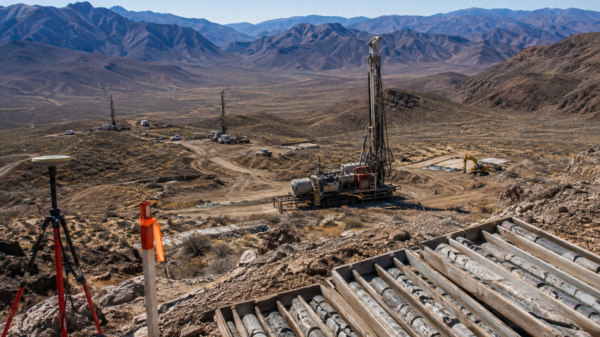
Read more: NevGold Corp. advances toward gold-antimony resource with expanded Nevada drilling
Read more: NevGold raises up to CAD$25M to fast-track Limo Butte development
Procurement strategies will vary based on mineral
The program will apply a “waterfall” sourcing model once the stockpile is established. Domestic suppliers will receive priority, even if their materials cost more than allied alternatives. However, participating manufacturers must accept those higher costs as part of the program’s design.
Officials said that trade-off supports long-term resilience over short-term savings. Additionally, it aims to strengthen domestic production capacity by guaranteeing demand.
Vault will initially rely on existing warehouse networks controlled by its trading partners. Meanwhile, the program plans to develop its own storage infrastructure over time. That expansion may include building facilities or leasing space across multiple regions.
A mature system could blend proprietary storage sites with third-party warehouses. Furthermore, that hybrid approach would offer flexibility as mineral demand shifts.
Procurement strategies will vary depending on the specific mineral. Rather than using open bidding, Vault will match purchases with traders who specialize in particular markets. For example, firms with expertise in cobalt or rare earths will handle those supply streams.
Panelists said this targeted approach should improve execution and maintain pricing discipline. Additionally, it may reduce the risk of market disruptions caused by sudden large-scale buying.
The panel marked the most detailed public discussion of Vault since its announcement in February. Meanwhile, investors and industry participants have sought clarity on how the program will operate.
Attendees filled a Washington conference room and engaged in an extended question-and-answer session. Consequently, officials provided new insight into sourcing rules, pricing considerations and operational structure.
Vault aims to give US manufacturers stronger leverage in markets where smaller buyers often struggle. Furthermore, it seeks to stabilize access to materials that remain critical to energy and technology supply chains.
Read more: NevGold reports more positive drill results as gold-antimony resource estimate nears
Read more: NevGold positions Nevada project for near-term antimony output
Antimony has become a focal point
The US government has already demonstrated how strategic alignment can unlock major funding for critical mineral projects, with Perpetua Resources (NASDAQ: PPTA) (TSE: PPTA) emerging as a leading example.
Perpetua has secured substantial backing from federal agencies, including support tied to antimony supply, a mineral critical for defence and energy systems. Additionally, the company has attracted financing interest from the Export-Import Bank as part of broader efforts to reduce reliance on foreign sources.
That support did not emerge in isolation. Instead, it reflects a coordinated policy approach that combines demand signals, financing tools and permitting support. Consequently, projects that align with national security priorities have gained a clearer pathway toward development.
Antimony has become a focal point within that strategy due to its limited domestic supply and reliance on imports. However, the US push to secure the mineral has elevated projects capable of delivering reliable, long-term production. Perpetua’s advanced-stage asset and permitting progress have positioned it as a cornerstone of that effort.
Meanwhile, the emergence of demand-side initiatives such as Project Vault is expected to reinforce that trend by guaranteeing buyers for domestically sourced materials. Furthermore, that structure could encourage earlier-stage developers to position their assets within the same policy framework.
NevGold Corp (CVE: NAU) (OTCMKTS: NAUFF) (FRA: 5E50) is among the companies seeking to align with that shift, advancing its gold-antimony project in Nevada. Additionally, the company has emphasized near-surface mineralization and potential development timelines that could appeal to policymakers focused on supply chain resilience.
That positioning reflects a broader industry response, as companies increasingly tailor project narratives to match evolving US critical mineral priorities.
.
NevGold Corp is a sponsor of Mugglehead news coverage
.