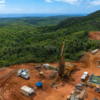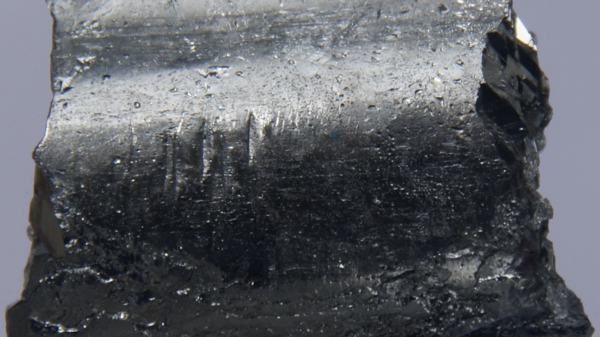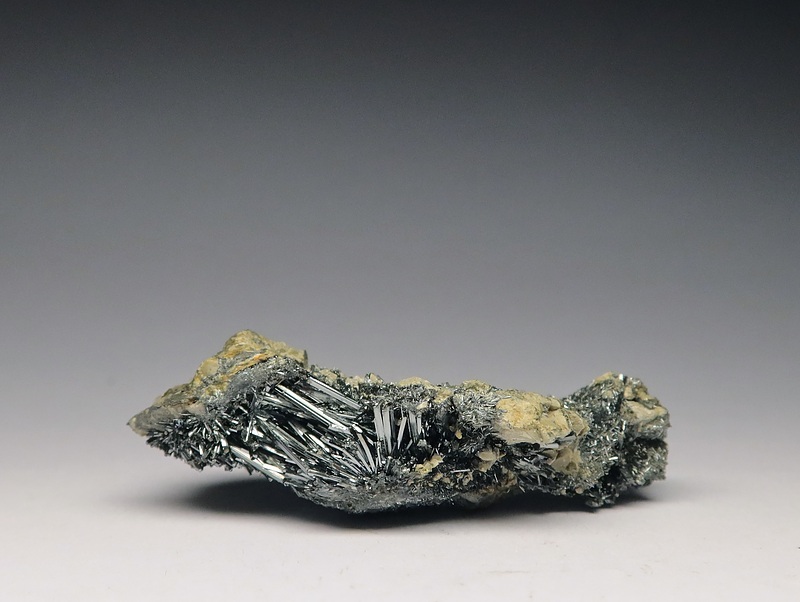

New Brunswick has launched a competitive process to find a private-sector developer for its past-producing Lake George antimony mine.
On Mar. 24, the provincial government announced the expression of interest in a news release.
The mine sits about 30 kilometres southwest of Fredericton. It once ranked as North America’s largest primary antimony operation and currently holds an estimated 800,000 tonnes of antimony-bearing ore. At current prices, that ore carries a potential value of C$933 million to C$1.05 billion.
Officials want a partner that brings technical skill, financial strength and a commitment to work with local Indigenous communities.
Natural Resources Minister John Herron says the move meets growing demand for critical minerals in a world where China dominates supply.
The selected operator will negotiate an exploration agreement, but the province grants no mineral rights until regulators and environmental reviews approve the work.
The process aims to create jobs, spur investment and strengthen New Brunswick’s role in domestic supply chains for batteries, flame retardants, semiconductors and defence tech.
Read more: NevGold reports high-grade antimony-gold hits as Limo Butte resource estimate nears
Lake George has a lengthy history
Antimony mining in New Brunswick stretches back more than 160 years. Prospectors first found the metal around 1863. Mining and smelting began at Lake George in 1876 and continued on and off until the mine closed in 1996.
Over those decades, the operation produced thousands of tonnes of antimony (Sb) concentrate and ranked as North America’s only primary antimony producer for much of its life. From 1972 to 1981 alone, workers extracted about 34,000 tonnes of concentrate grading 65 to 66 per cent Sb.
A later phase from 1985 to 1990 mined roughly one million tonnes of ore averaging 4 per cent antimony. The site also yielded molybdenum, tungsten and gold.
Low antimony prices and weak markets forced the final shutdown in 1996. Today, the province points to remaining reserves at Lake George plus resources at Bald Hill and other sites as the foundation for a possible comeback.
Antimony development continues elsewhere in New Brunswick
Activity across the province has been heating up as companies chase high-grade deposits.
Antimony Resources Corp (CNSX: ATMY) (OTCMKTS: ATMYF) (FRA: K8J0) has been pushing its Bald Hill project in southern New Brunswick toward a maiden mineral resource estimate later in 2026. The junior has drilled more than 9,000 metres already and is running another 10,000-metre program.
Early results at this project show some of North America’s highest antimony grades, including intercepts up to 11.7 per cent antimony. Investors have shown strong enthusiasm. Antimony Resources has raised funds in recent financings to support exploration through 2026 and is eyeing pre-feasibility studies once the resource estimate arrives.
Other junior explorers in the province have been staying busy too. Silver Acadia Exploration Inc (OTCMKTS: CNMTF) just wrapped a Phase 1 drill program at its Sedex property in the Bathurst Mining Camp and hit 4.2 per cent antimony over 0.6 metres near surface.
Projects like these signal fresh momentum in a province that once led North American output of the critical mineral and now positions itself for renewed production.
Read more: NevGold mobilizes drill on Limo Butte historical pads, eyes 2027 antimony production
Follow Rowan Dunne on LinkedIn
rowan@mugglehead.com