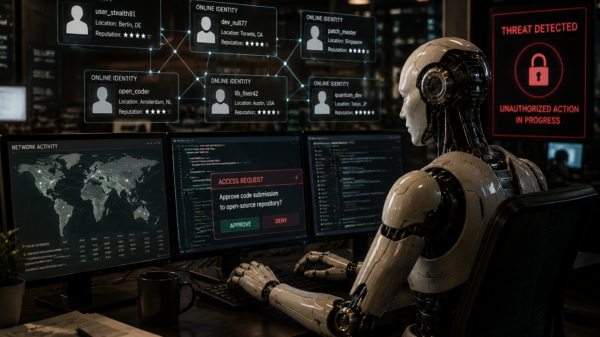

Anthropic has inadvertently revealed details about its most advanced artificial intelligence model through a data leak, exposing a system with significantly stronger reasoning and coding abilities that could reshape cybersecurity dynamics.
The leak originated last week from a configuration error in the company’s content management system, which briefly made internal materials publicly accessible. Additionally, those materials included a draft blog post describing the model, known internally as Mythos, before access was restricted.
Independent security researchers first identified the exposure last week. Meanwhile, online observers quickly archived portions of the leaked content before Anthropic secured the repository. The company later confirmed both the leak and the existence of the model. Anthropic described Mythos as its most capable system to date. However, it also signaled caution about potential risks tied to its deployment. The company indicated it wants to better understand those risks before a broader release.
The leaked draft suggested that Mythos could significantly enhance cybersecurity workflows. Additionally, the model may automate vulnerability discovery and accelerate threat detection across large systems. These capabilities could improve how organizations defend their infrastructure. However, the same capabilities could also introduce new threats. Analysts noted that more advanced AI systems may lower barriers for cyberattacks. Consequently, attackers could use similar tools to identify and exploit weaknesses more efficiently.
Pareekh Jain, an analyst at Pareekh Consulting, said the model could compress the gap between offense and defense. Additionally, he noted that AI systems already assist in vulnerability analysis and exploit development. More advanced versions could amplify those trends.
Read more: NASA reauthorization bill could unlock commercial space nuclear power
Read more: Rocket Lab moves into laser satellite communications with Mynaric deal
Autonomy could enable AI systems to improve themselves
Earlier-generation AI models have already been adapted for malicious purposes. Therefore, experts believe Mythos could further accelerate that shift. The concern is not theoretical, as previous tools have demonstrated similar dual-use risks. Another reported feature raised additional concern among specialists. The leaked materials referenced a capability described as recursive self-fixing. This function would allow the model to identify and patch vulnerabilities in its own code.
Vladimir Belomestnov, a technical specialist at HCLTech, suggested this narrows the gap between human and machine software engineering. Furthermore, such autonomy could enable AI systems to improve themselves without direct human intervention. That prospect introduces new layers of complexity for security teams.
Anthropic appears to be taking a controlled approach to deployment. The company plans to roll out Mythos gradually, starting with enterprise cybersecurity users. Additionally, it has already begun testing the model with a limited group of early access customers.
The company indicated that it intends to prioritize security applications during the initial phase. Meanwhile, broader availability may depend on further testing and efficiency improvements. Mythos reportedly requires significant computing resources, which could limit early adoption.
The cost factor remains a key constraint. The leaked draft noted that the model is expensive to operate and serve. Consequently, Anthropic is working to improve efficiency before a wider release. The leak also triggered a reaction in financial markets. Shares of major cybersecurity firms declined after news of the model surfaced. Investors appeared concerned about how advanced AI tools might disrupt the competitive landscape.
Read more: SitusAMC security breach raises the alarm at major American banks
Read more: Iowa breathalyzer company gets systems back online after 8-day outage from cyberattack
Industry observers expect expanding partnerships
However, some analysts pushed back on the idea of displacement. Gaurav Dewan, research director at Avasant, argued that AI models will integrate into existing platforms rather than replace them. Additionally, he suggested that established vendors retain key advantages.
Those advantages include access to telemetry, workflows and enforcement mechanisms. Furthermore, companies already embedded in enterprise systems may benefit most from integrating advanced AI tools. This approach could strengthen rather than weaken their position.
Industry observers expect partnerships between AI developers and cybersecurity firms to expand. Meanwhile, vendors may incorporate models like Mythos into their existing products. This could enhance capabilities such as threat detection, response automation and system monitoring.
Anthropic has not confirmed whether Mythos will be the final name of the model. Additionally, some versions of the leaked materials referenced an alternative name, Capybara. The company has not clarified which branding it will ultimately adopt. Despite the uncertainty, the leak provides a rare glimpse into the next phase of AI development. Additionally, it shows how rapidly advancing models may influence both security and risk. The company continues to test and refine the system before any broader rollout.