
U.S. pharmaceutical giant Eli Lilly (NYSE: LLY) has struck a USD$2.75 billion deal to bring artificial intelligence-designed drugs from Insilico Medicine to global markets, marking a major step for AI-driven drug development.
The Monday agreement includes an upfront payment of USD$115 million. Additionally, Insilico could receive milestone payments tied to regulatory approvals and commercial performance. The company will also earn royalties on future sales.
Insilico has developed at least 28 drug candidates using generative AI tools. Nearly half of those programs have already reached clinical stages, according to chief executive Alex Zhavoronkov. Meanwhile, the company completed a public listing in Hong Kong in December. Its shares have climbed more than 50 per cent this year.
Zhavoronkov said Lilly brings strong internal expertise across biology, chemistry and automation. However, he noted the partnership combines complementary strengths rather than replacing either side’s capabilities. As part of the deal, Insilico will also join Lilly’s Gateway Labs ecosystem.
The two firms have collaborated since 2023 under an AI software licensing agreement. Consequently, the expanded partnership builds on an existing working relationship. Lilly’s Andrew Adams said the collaboration will help identify new drug targets more quickly. He added that Insilico’s AI tools can enhance Lilly’s clinical development pipeline.
Artificial intelligence is reshaping how companies discover new medicines. Traditionally, researchers spend years identifying viable molecules through trial and error. However, AI systems can analyze vast datasets and predict promising compounds in a fraction of the time. Consequently, companies aim to reduce both development timelines and costs.
Insilico develops its AI platforms primarily in Canada and the Middle East. Meanwhile, it conducts early-stage drug testing in China.
Read more: Breath Diagnostics advances pre-op pneumonia screening with FDA breakthrough designation
Read more: Prestigious medtech intelligence firm recognizes Breath Diagnostics for innovation
Lilly has been expanding its Chinese presence
Zhavoronkov said this structure allows faster experimentation while maintaining global research capabilities. Additionally, AI tools can design and synthesize molecules more efficiently than traditional methods.
Lilly has also been expanding its presence in China. Earlier this month, chief executive David Ricks attended a high-level forum in Beijing. Furthermore, the company recently committed USD$3 billion to invest in China over the next decade. China currently accounts for less than 3 per cent of Lilly’s total revenue. However, the company continues to position itself for long-term growth in the region.
The deal reflects increasing competition among pharmaceutical companies to adopt AI in drug discovery. Additionally, partnerships like this allow firms to share risk while accelerating innovation.
Beyond this deal, artificial intelligence is steadily expanding its footprint across the broader medical landscape, reshaping how diseases are detected, treated and managed.
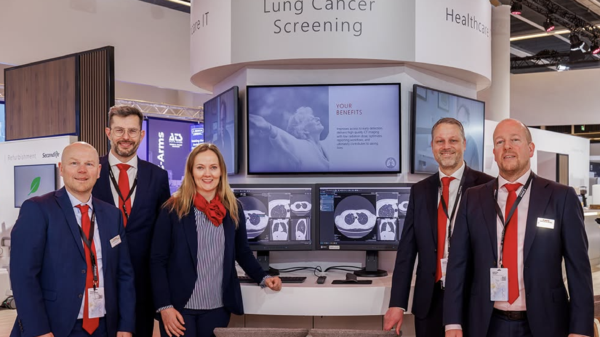
In diagnostics, companies like Breath Diagnostics are exploring AI-driven breath analysis to identify conditions such as lung cancer earlier. These systems analyze chemical patterns in exhaled air to detect disease signals. Consequently, clinicians could gain faster, non-invasive screening tools that improve early detection rates.
In treatment, firms like Tempus AI (NASDAQ: TEM) are using artificial intelligence to match patients with personalized therapies. The company aggregates clinical and molecular data to guide oncologists toward more targeted treatment plans. Additionally, AI models can predict how patients may respond to specific drugs, reducing trial-and-error approaches.
Meanwhile, in drug manufacturing and operations, companies such as Recursion Pharmaceuticals (NASDAQ: RXRX) are applying AI to optimize production and streamline research pipelines. These platforms analyze experimental data at scale to refine processes and improve efficiency. Furthermore, AI can help identify manufacturing bottlenecks and enhance quality control across facilities.
.
joseph@mugglehead.com