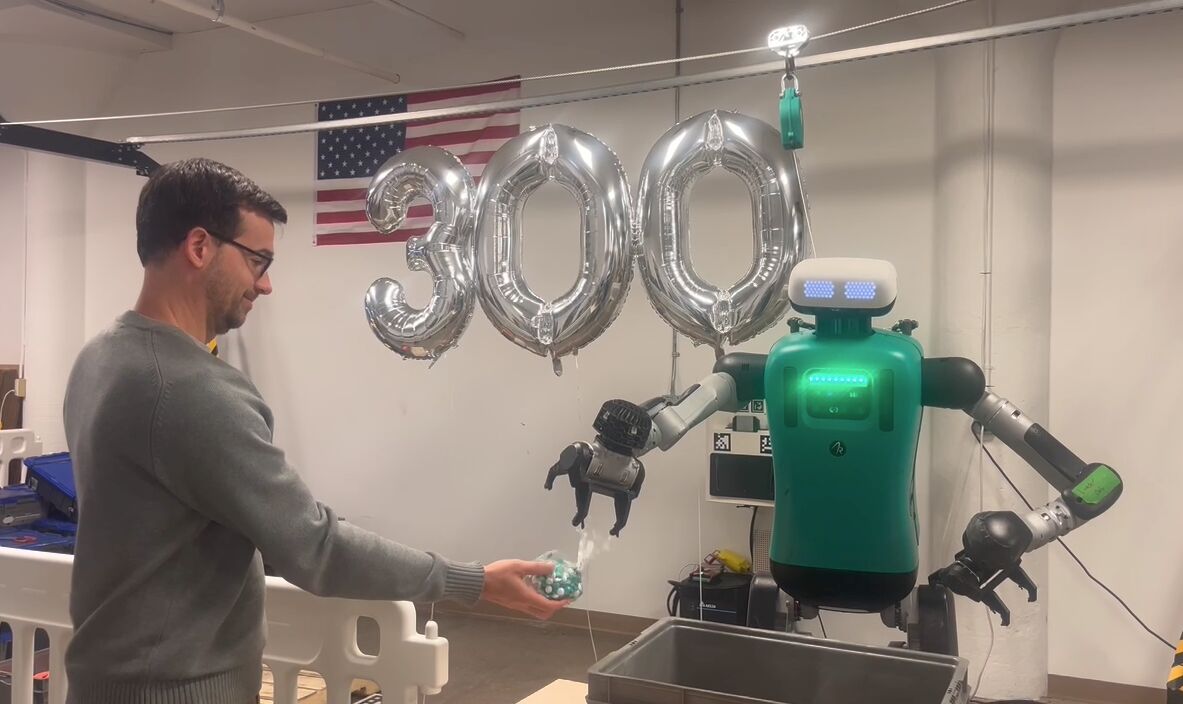

Toyota Motor Manufacturing Canada (TMMC) has signed a commercial agreement with Agility Robotics to deploy humanoid robots at its Woodstock assembly plant in Ontario.
Following a successful year-long pilot with three units, Toyota Motor Corp (NYSE: TM) will introduce seven “Digit” humanoids under a Robots-as-a-Service (RaaS) model.
The robots will handle repetitive material-handling tasks, such as loading and unloading totes of auto parts from automated tugger carts. The aim is to ease physical strain on workers, enhance safety and improve efficiency at the facility that produces RAV4 SUVs.
Deployment will commence with three units in April. Pending initial success of this secondary pilot phase, the remaining four will enter the plant later on.
Digit adds flexible automation to logistics
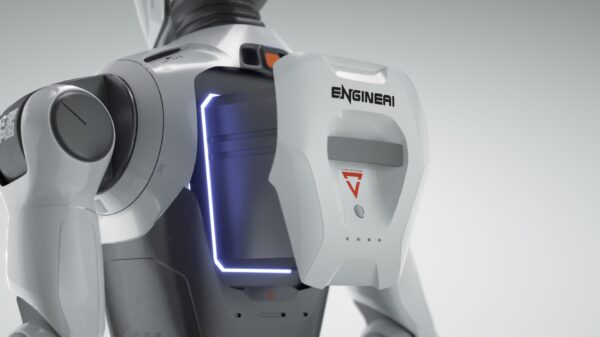
Developed by Oregon-based Agility Robotics, Digit stands about 5 feet 9 inches tall and features bipedal legs, dexterous arms, hands and advanced vision systems powered by AI.
The robot is capable of navigating human environments without major facility modifications, learning new tasks over time and performing monotonous work for extended periods. At Woodstock, these robots will be utilized to bridge gaps between automated systems by removing empty totes from tuggers and replacing them with full ones. This will free up human team members for quality inspections, problem-solving and more skill-demanding roles.
Agility Robotics, a tech company that emerged from Oregon State University in 2015, is a leader in real-world humanoid deployments. Digit already operates at facilities for Amazon.com Inc (NASDAQ: AMZN) (FRA: AMZ), GXO Logistics Inc (NYSE: GXO) (FRA: 93N) and Schaeffler AG (OTCMKTS: SCAFF) (ETR: SHA0), moving thousands of items daily.
TMMC President Tim Hollander noted that after evaluating various options, the team ultimately chose Digit to boost operational performance. Agility CEO Peggy Johnson said her company was honoured to work with an established automotive giant like Toyota.
The RaaS model lets Toyota pay for results rather than upfront hardware, including maintenance and software updates via Agility’s Arc platform.
Read more: Investment firm thinks TOTO is a highly undervalued AI player
Humanoids add to Toyota’s Canadian robotics legacy
Canadian automotive manufacturing has long embraced robotics, with thousands of traditional industrial arms handling welding, painting and precise assembly. Toyota’s plants in Cambridge and Woodstock employ over 8,500 people and produced more than 535,000 vehicles in 2025. They are supported by hundreds of automated guided vehicles used to transport materials throughout the facilities and decades of incremental automation on the assembly line.
Toyota and Agility’s new humanoid initiative extends automation into dynamic logistics areas where fixed/stationary robots fall short. Observers are optimistic about the potential for reduced repetitive strain injuries as workers shift from heavy lifting to oversight tasks.
Beyond these Ontario factories, Toyota pushes robotics innovation. At the 2025 Japan Mobility Show, the automobile production leader introduced Walk Me — a quadruped robotic mobility aid that climbs stairs, traverses rough terrain and assists users into vehicles.
Achievements like these showcase Toyota’s enthusiasm for human-centred robotics in everyday life and on the production line.
This is the kind of robotics progress I pay attention to.
Toyota introduced Walk Me, a walking wheelchair that moves on mechanical legs instead of wheels. It can climb stairs, handle rough terrain, and adapt to environments that were never designed to be accessible.
The point… pic.twitter.com/TngeUN9CIB
— Pascal Bornet (@pascal_bornet) February 11, 2026
Read more: World’s first humanoid robot fight league launches with US$1.4M gold belt prize
Follow Rowan Dunne on LinkedIn
rowan@mugglehead.com