
OpenAI’s investment in ChatGPT has delivered extraordinary revenue growth, but it has not yet delivered a conventional return on investment.
Since ChatGPT’s public launch, OpenAI has scaled into one of the highest-grossing private software businesses in history.
Subscriptions, enterprise licensing, and API usage have pushed annualized revenue into the tens of billions of U.S. dollars. Few companies have expanded top-line revenue this quickly. That growth, however, sits alongside an equally aggressive cost structure.
OpenAI’s largest expense is compute. Training and running frontier-scale language models requires constant access to specialized hardware, primarily high-end GPUs. Inference compounds the problem. Every additional user interaction carries a marginal cost, turning scale into a financial liability rather than a margin lever.
As a result, OpenAI remains deeply unprofitable.
Industry estimates suggest annual losses still exceed revenue, even after the expansion of paid ChatGPT tiers and enterprise contracts. Long-term infrastructure commitments now stretch into the tens of billions of dollars. Those obligations rise with model ambition rather than decline with scale.
From a traditional ROI perspective, the conclusion is straightforward. OpenAI has not generated positive free cash flow from ChatGPT. It is not EBITDA-positive. EBITDA being finance-speak for earnings before interest taxes depreciation and amortization.
Furthermore, there is no evidence that the product, in its current form, produces surplus capital after operating costs. That gap between revenue and return has drawn skepticism from outside the company.
Read more: Artificial intelligence moves renewable power from variable to dependable
Read more:Quantum computing revives debate over Bitcoin’s long-term security
Chasing artificial general intelligence is expensive
Arvind Krishna, CEO of IBM, recently questioned whether enterprise returns could ever justify the capital being committed to artificial general intelligence, OpenAI’s stated long-term priority.
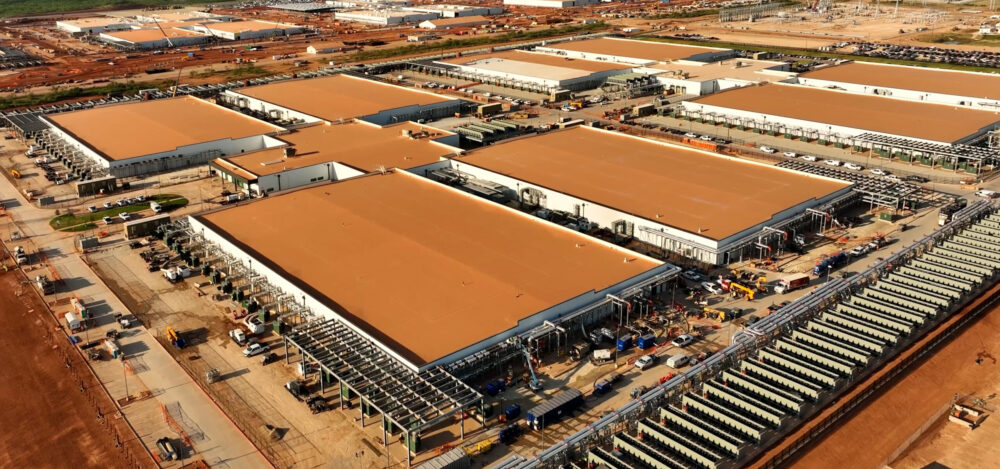
He framed the issue in blunt financial terms. A single one-gigawatt data centre now requires roughly USD$80 billion in capital, based on current construction and equipment costs.
A company committing 20 to 30 gigawatts would therefore face capital expenditures approaching USD$1.5 trillion. At an industry level, Krishna said total commitments tied to chasing artificial general intelligence (AGI) are trending toward 100 gigawatts, implying capital spending closer to USD$8 trillion.
“It takes about $80 billion to fill up a one-gigawatt data center,” he said. “That’s today’s number. If one company is going to commit 20-30 gigawatts, that’s $1.5 trillion of [capital expenditure].”
Considering the “total commits” of “chasing AGI” amounts to 100 gigawatts, he reasoned, that’s “$8 trillion of capital expenditure.”
“It’s my view that there’s no way you’re going to get a return on that because $8 trillion of capital expenditure means you need roughly $800 billion of profit just to pay for the interest.”.
The math lays bare the central problem facing ChatGPT as a business. Growth alone does not equal return. ROI depends on whether incremental revenue exceeds incremental compute. That threshold has not yet been crossed.
OpenAI’s internal projections reportedly push profitability several years into the future. Those forecasts assume declining compute costs, sustained pricing power, and limited competitive pressure. None are guaranteed.
.
joseph@mugglehead.com