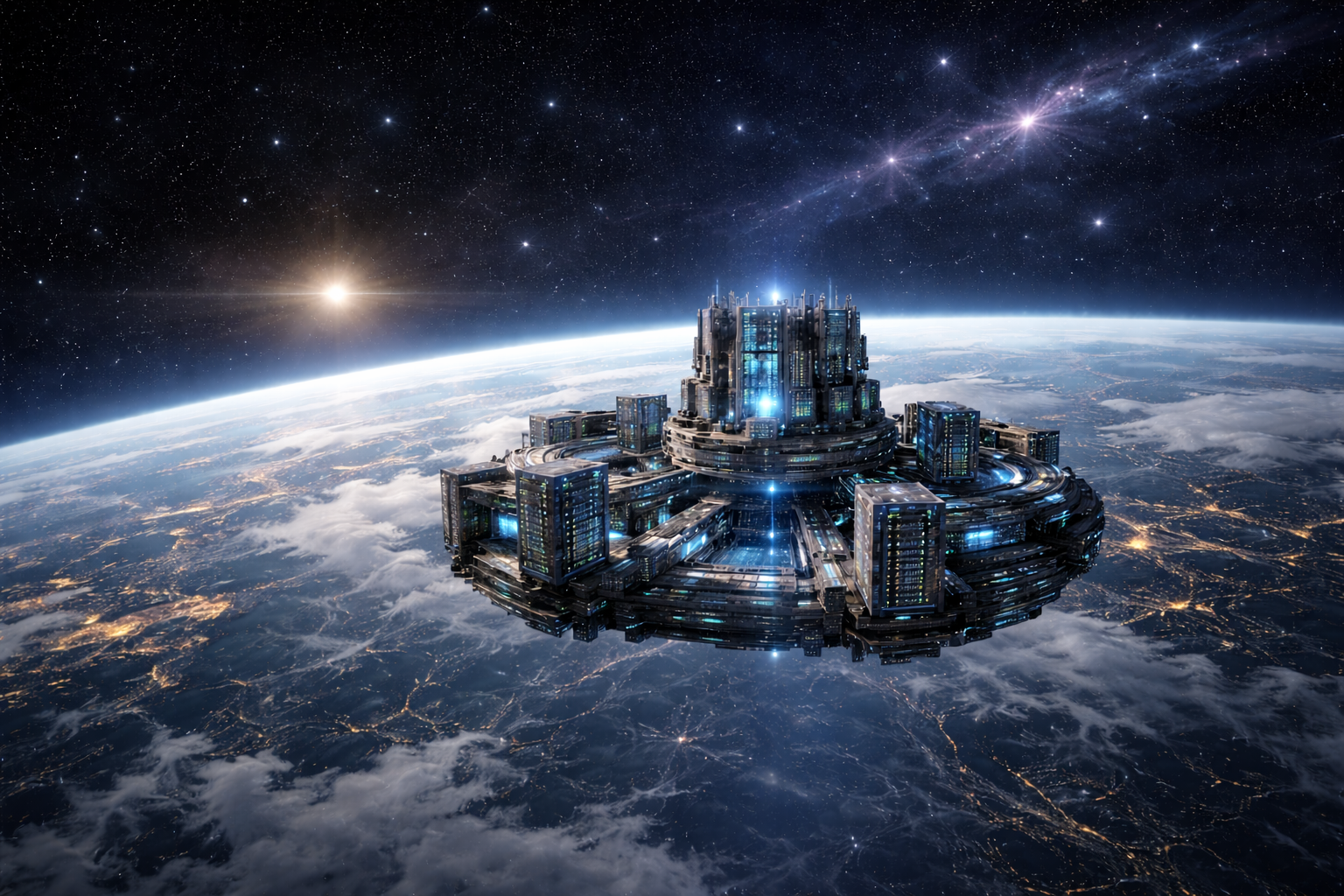

In a cosmic union of artificial intelligence and rockets, Elon Musk’s merger of xAI and SpaceX is set to propel AI data centres into orbit.
Announced this week, the combined entity, valued at a staggering US$1.25 trillion and now designated as the world’s most valuable private company, intends to deploy up to a million solar-powered satellites to form large-scale orbital data centres.
The tech magnate revealed his vision in a recent podcast episode, declaring that it is harder to scale on the ground than it is in space because of convenient access to solar power above the earth.
“By far the cheapest place to put AI will be in space within 36 months or less,” he stated, adding that it will enable unprecedented model training and processing speeds.
Musk highlighted that solar panels in space generate five times more power without needing batteries, thereby making orbital AI the only feasible means to scale in the future amid energy constraints on our planet. Elon has warned that AI computing in the United States could soon require twice as much power as it currently does.
🚨 ELON MUSK JUST PUT A DEADLINE ON EARTH – "30 MONTHS LEFT. MARK MY WORDS”
On a podcast, Elon Musk doesn’t speculate, he timestamps the future. He says AI cannot scale on Earth the way it can in space. Period.
Solar power in orbit is ~5× more effective and radically cheaper… pic.twitter.com/iX78FCSfMp
— HustleBitch (@HustleBitch_) February 5, 2026
Read more: Elon Musk claims OpenAI and Microsoft owe him billions from early backing
Proposed orbital scheme draws mixed reactions
His plan will harness constant sunlight in orbit, enabling data centres to bypass land shortage restrictions, water-intensive cooling requirements and regulatory hurdles ground-based projects face.
Nonetheless, experts on artificial intelligence remain divided on the topic. Northeastern University computer and electrical engineering professor Josep Jornet, for instance, has warned that “an uncooled computer chip in space would overheat and melt much faster than one on Earth,” highlighting severe cooling challenges in the vacuum of space.
Heat dissipation requires massive radiators, radiation could potentially fry chips and an abundance of satellites may lead to orbital clutter and collisions.
Others, like satellite research director Lluc Palerm of consulting firm Analysys Mason, view the goal as plausible in the long term but consider Musk’s aggressive timeline unrealistic. He described it as “more a long-term goal,” akin to a Mars mission that would take years to develop and scale.
Meanwhile, supporters like David Ariosto of The Space Agency have hailed Musk’s game plan as “not sci-fi anymore” considering his track record of achievements in the technology field.
Starship gives Musk an edge over rivals
Competitors, including Google’s Project Suncatcher and Starcloud’s test satellites are racing ahead, but Musk’s launch dominance via the SpaceX Starship gives him an edge over other aspirants. Starship’s superior launch capacity is widely cited as SpaceX’s biggest differentiator in the emerging orbital data centre race.
Elon’s new orbital ambitions align with Tesla’s recent pivot to AI and robotics as the company invests heavily in full self-driving software and making the Optimus humanoid robot available to the masses.
On a less positive note for the world’s wealthiest man, his X social media platform has been embroiled in multiple controversies as world governments grow increasingly critical about the unchecked dissemination of content many may view as hateful and inappropriate.
X LLM Grok has been on a tear lately, enabling a viral “put her in a bikini” trend, upsetting the Anti Defamation League and generating millions of sexualized images that have prompted investigations from multiple nations.
As Musk’s tech empire expands above the clouds, these ground-based tensions highlight the high stakes of his next-gen ambitions.
Elon Musk’s Plan to reach a Kardashev Type II Civilization
1. Move AI off Earth and into space
AI needs massive power and cooling. Earth cannot scale this without damaging the environment and society. Space has constant sunlight, natural cooling, and unlimited room. Long term,… pic.twitter.com/h7DFBxQv6s
— DogeDesigner (@cb_doge) February 3, 2026
Read more: Grok continues on rogue spree of controversial content alteration
Follow Rowan Dunne on LinkedIn
rowan@mugglehead.com