
Seven million cancer cases each year could be prevented if countries aggressively reduced known, avoidable risks, according to a landmark global analysis by World Health Organization scientists.
Released ahead of World Cancer Day on Wednesday, the study estimates that 37 per cent of cancers worldwide stem from infections, lifestyle choices, and environmental exposures that people can avoid.
Additionally, the analysis suggests prevention policies could spare millions of families from diagnosis, treatment, and early death.
Researchers at the International Agency for Research on Cancer examined data from 185 countries to quantify preventable cancer risk. They compared cancer cases recorded in 2022 with exposure to known risks roughly a decade earlier. Consequently, the team linked long-term behaviors and exposures to later disease outcomes.
Some cancers remain unavoidable because aging damages DNA or inherited genes raise baseline risk.
However, the researchers found that nearly four in ten cases do not fall into that category. Furthermore, many of those cases relate to risks that public policy can influence directly.
Dr Isabelle Soerjomataram, deputy head of the IARC Cancer Surveillance Unit, said the proportion surprises many people. She explained that the number feels large because it represents a substantial share of all cancers diagnosed globally. Additionally, she said the findings point to a powerful opportunity to improve public health.
The researchers assessed 30 established cancer risk factors. These included smoking, alcohol use, obesity, physical inactivity, ultraviolet radiation, and air pollution. In addition, the team evaluated occupational exposures and environmental pollutants.
Smoking and UV radiation damage DNA directly, raising cancer risk over time. Meanwhile, obesity and low physical activity alter hormones and inflammation that promote tumour growth. Additionally, air pollution can activate dormant cancer cells, accelerating disease progression.
Over 18 million new cancer cases in 2022
The report also analyzed nine cancer-causing infections. These included human papillomavirus, hepatitis B and C, and Helicobacter pylori. Consequently, the study treated infections as a central pillar of cancer prevention.
HPV causes nearly all cervical cancers, yet vaccines can prevent most infections. Similarly, hepatitis viruses drive many liver cancers, which vaccination and screening can reduce. Additionally, treating H. pylori infections lowers stomach cancer risk substantially.
Globally, more than 18 million new cancer cases occurred in 2022. The analysis attributed the largest share of preventable cases to three dominant causes. Furthermore, those causes spanned behavior, biology, and social conditions.
Smoking tobacco caused about 3.3 million cancer cases worldwide. Infections accounted for roughly 2.3 million cases. Alcohol use led to an estimated 700,000 cancers.
However, the overall figures conceal sharp regional and demographic differences. Cancer risk varied widely by sex, income level, and geography. Consequently, the researchers cautioned against one-size-fits-all prevention strategies.
Among men, 45 per cent of cancers proved preventable. Among women, the share dropped to about 30 per cent. Additionally, higher smoking rates among men explained much of that gap.
In Europe, smoking ranked as the leading preventable cancer cause for women. Infection followed closely, with obesity ranking third. Conversely, in sub-Saharan Africa, infections dominated the picture.
In that region, infections caused nearly 80 per cent of preventable cancers in women. This pattern reflects higher prevalence of HPV, hepatitis, and limited access to vaccines. Furthermore, screening programs remain uneven across many low-income countries.
The study found lung cancer as the most common preventable cancer globally. Smoking and air pollution drove most of those cases. Additionally, stomach and cervical cancers followed closely.
Read more: Prestigious medtech intelligence firm recognizes Breath Diagnostics for innovation
Read more: Breath Diagnostics adopts state-of-the-art mass spectrometer device for lung screening
Prevention methods deliver measurable results within years
Stomach cancer linked strongly to H. pylori infection. Cervical cancer tied overwhelmingly to HPV infection. Together, these three cancers accounted for nearly half of all preventable cases.
The researchers emphasized that prevention strategies must reflect local conditions. Tobacco control policies matter most in high-income countries with long smoking histories. Meanwhile, vaccination and infection control prove critical in lower-income regions. Dr Andre Ilbawi, who leads cancer control efforts at the WHO, described the findings as encouraging. He said the study shows governments can change cancer outcomes through policy choices. Additionally, he pointed to real-world examples of success.
Countries that raised tobacco taxes and restricted advertising reduced smoking rates sharply. Similarly, nations that introduced HPV vaccination programs saw cervical cancer rates fall. Consequently, prevention efforts can deliver measurable results within years.
Ilbawi said the proportion of preventable cancers can shift over time. He explained that prevention aims to push that figure as close to zero as possible. Furthermore, progress depends on sustained political and financial commitment.
The researchers noted that prevention often costs less than treatment. Public health measures reduce strain on hospitals and health budgets. Additionally, prevention spares patients from invasive therapies and long recoveries.
Air pollution emerged as a growing concern in rapidly industrializing regions. Urban residents face rising exposure to fine particles and toxic emissions. Consequently, environmental policy now intersects directly with cancer prevention.
Climate change may worsen some cancer risks indirectly. Heat, fires, and pollution events can increase harmful exposures.
Read more: Breath Diagnostics tech achieves pneumonia prediction breakthrough in peer-reviewed study
Read more: Breath Diagnostics leader speaks at lung cancer education event in Louisville
Reducing smoking, expanded vaccination save lives
The study relied on conservative estimates of risk. The authors acknowledged that some exposures remain difficult to measure precisely. However, they said the overall conclusions remain robust.
Data gaps persist in low-income countries with weaker cancer registries. Additionally, underdiagnosis may mask the true scale of preventable disease. The researchers urged investment in surveillance and data collection.
Public understanding also shapes prevention success. People often underestimate how strongly everyday choices affect cancer risk. Furthermore, misinformation can undermine vaccination and screening uptake. The report framed prevention as a shared responsibility. Governments control policy, but individuals influence lifestyle choices. Consequently, effective prevention blends regulation, education, and access.
The researchers stressed that avoidable does not mean easy to avoid. Social inequality limits healthy choices for many communities. Additionally, tobacco, alcohol, and processed food industries exert strong influence.
Still, the analysis presents a clear roadmap. Reducing smoking, expanding vaccination, improving diets, and cleaning air would save lives. Furthermore, these actions would narrow global health disparities.
The findings appeared in the medical journal Nature Medicine. The authors described the work as the first comprehensive global assessment including infections. Additionally, they said it integrates behavioral, environmental, and occupational risks.
They argued that prevention deserves equal status with treatment in cancer policy. Too often, health systems prioritize care after diagnosis. However, preventing disease earlier delivers broader social benefits.
Read more: Breath Diagnostics opens Respiratory Innovation Summit with captivating presentation
Read more: Breath Diagnostics gives the public the chance to join the fight against cancer
Low-dose CT expose patients to ionizing radiation
The researchers said future updates will track progress over time. They plan to reassess preventable cancer shares as policies evolve. Additionally, they aim to refine estimates as better data emerge.
Cancer screening often breaks down for reasons unrelated to medicine.
Diagnosis usually demands time, travel, and repeated appointments that clash with work and family duties. Additionally, many people must take unpaid time off, which creates a financial penalty for early detection. Hourly workers face the sharpest trade-offs, especially when appointments fall during business hours. Consequently, some delay screening until symptoms become severe.
The structure of diagnosis also adds psychological and physical friction. Patients often move through multiple steps before receiving clear answers. In addition, those steps may include primary care visits, imaging, referrals, and biopsies. Each stage increases the chance that patients drop out of the process.
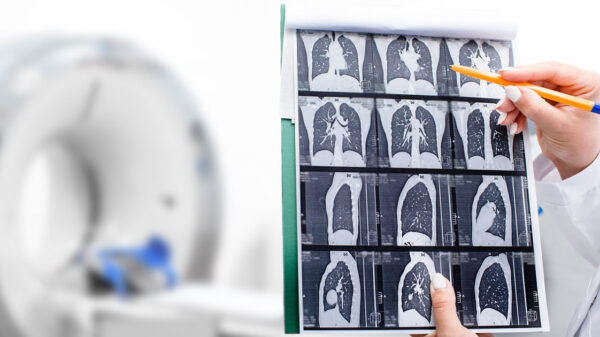
Lung cancer screening illustrates these pressures clearly. Doctors rely heavily on low-dose CT scans to detect early-stage disease. However, these scans still expose patients to ionizing radiation. Although the dose remains small, repeated annual scans add cumulative exposure over time. Additionally, the perception of radiation risk can discourage participation.
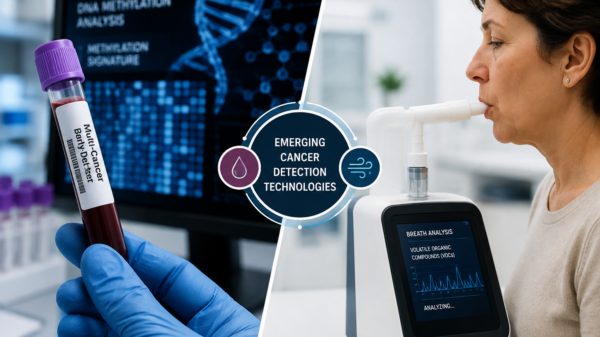
These structural hurdles have pushed companies to explore alternative diagnostic paths. Several firms now aim to shift early detection toward simpler, lower-friction tests. Additionally, they seek tools that fit into routine care without radiation exposure. The goal is not to replace imaging entirely, but to triage risk earlier.
Breath Diagnostics Inc is developing OneBreath, a breath-based lung cancer test. The system analyzes a single exhaled breath for chemical signatures linked to cancer.
According to the company, tumours alter metabolism and release distinct volatile compounds. Additionally, OneBreath measures these compounds using sensitive laboratory techniques. The approach avoids radiation and could occur in a standard clinic setting.
Convenience improves screening uptake
Breath-based testing may reduce barriers tied to imaging access. Patients would not need to schedule specialized scans or travel to imaging centres. Consequently, early assessment could happen during routine visits. However, breath testing still faces validation challenges across diverse populations.
Guardant Health Inc (NASDAQ: GH) (FRA: 5GH) pursues a blood-based strategy known as liquid biopsy.
Its tests search blood samples for fragments of tumour DNA circulating in the bloodstream. Additionally, these fragments can appear before symptoms develop. The company argues that blood draws align well with existing healthcare workflows. That convenience could improve screening uptake among high-risk groups.
Guardant’s approach aims to flag cancer risk earlier rather than deliver final diagnoses. A positive result would still require imaging or biopsy confirmation. However, the initial blood test may help focus resources on patients most likely to benefit. Consequently, health systems could reduce unnecessary scans.
.
joseph@mugglehead.com