
The global wearable technology market is accelerating as consumers integrate smart devices into daily routines for health, communication, and entertainment.
According to a Tuesday study from analysts, MarketsandMarkets, the sector is expected to reach USD$176.77 billion by 2030, up from USD$84.53 billion in 2025. That trajectory implies a compound annual growth rate of 15.9 per cent during the forecast period.
Meanwhile, analysts attribute the expansion to rising health awareness, smartphone adoption, and improving wireless connectivity. Additionally, advances in artificial intelligence, the Internet of Things, and 5G networks continue to broaden wearable capabilities.
The research firm tracked market performance across 195 data tables and 95 figures spanning 310 pages of analysis. It covers market size estimates from 2021 through 2030 and breaks growth down by product, type, operation, application, and region. Consequently, the study positions wearables as a core pillar of the broader connected device economy. Consumers increasingly rely on these devices for instant information and real-time feedback throughout the day.
Furthermore, developers now design wearables to consolidate communication, navigation, and lifestyle tools into single platforms.
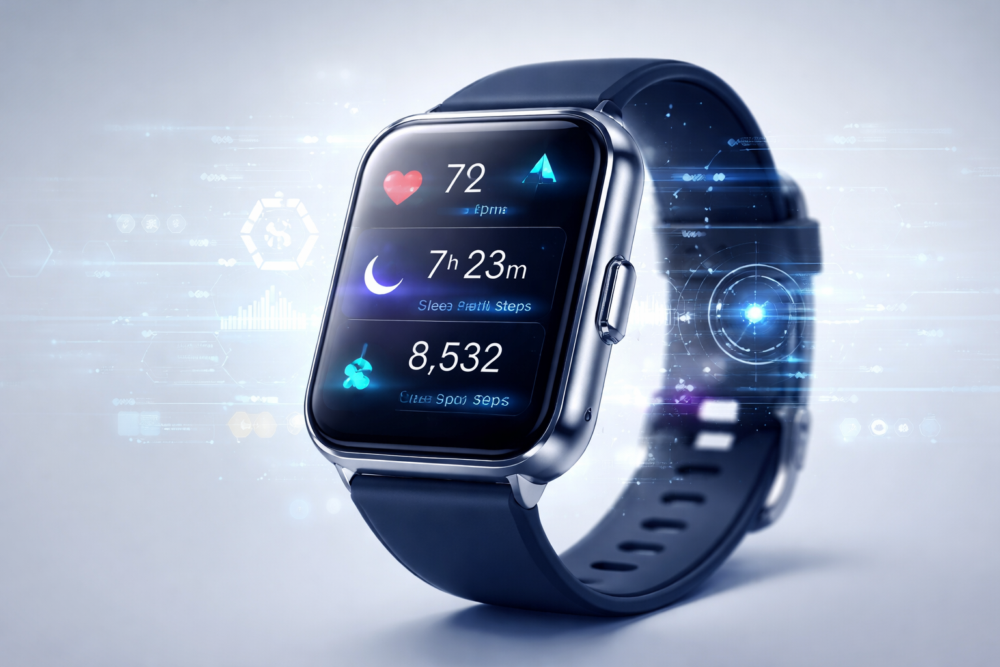
By product category, wrist-worn devices are expected to command the largest share in 2025. Smartwatches and fitness bands dominate because users wear them continuously and interact with them frequently.
Additionally, manufacturers keep adding sensors that track heart rate, sleep, movement, and blood oxygen levels. Those features support preventive health monitoring and everyday fitness goals. Consequently, wristwear remains the most visible and commercially mature segment.
By type, non-textile wearables are projected to lead the market throughout the forecast period. These products include smartwatches, earbuds, head-mounted displays, and health monitoring devices. Meanwhile, textile-based wearables face higher costs and slower consumer acceptance.
Read more: Wearable Devices neural tech turns muscle activity into data
Read more: Whoop on the FDA hot seat for not following marketing rules
AI wearables expected to grow the fastest
Manufacturers continue refining non-textile designs to improve comfort, battery life, and durability. As a result, consumers show stronger demand for rigid, compact devices with broad app ecosystems.
Operationally, the report indicates that AI-based wearables will grow at a rate of 18.4 per cent CAGR. These devices use machine learning to interpret biometric data and deliver personalized insights. Additionally, AI enables predictive alerts that flag irregular heart rhythms or sleep disruptions.
Healthcare providers increasingly adopt these tools for remote patient monitoring and chronic disease management. Furthermore, integration with smartphones and smart homes enhances daily usability and engagement.
Rapid urbanization, expanding middle classes, and smartphone penetration drive adoption across the region. Additionally, regional manufacturers release competitively priced devices that appeal to cost-conscious buyers. However, the report anticipates that North America will retain overall market leadership. The region benefits from advanced healthcare systems and strong consumer spending power.
By application, the report projects consumer electronics to hold the largest market share by 2030. Smartwatches, fitness trackers, and wireless earbuds remain closely tied to smartphone ecosystems.
Additionally, frequent product launches and rapid feature updates sustain consumer interest. Retail and e-commerce channels also support broad distribution and brand visibility. Consequently, lifestyle-focused wearables continue to outpace industrial and enterprise applications.
Several Tier I and Tier II companies dominate the competitive landscape.
These include Apple Inc. (NASDAQ: AAPL), Samsung Electronics (KRX: 005930), and Xiaomi (HKEX: 1810).
Additionally, Huawei Technology Co Ltd., Imagine Marketing Limited, and Garmin Ltd. (NYSE: GRMN) play significant roles.
Further, Sony Corporation and LG Electronics (KRX: 066570) maintain strong brand positions.
Meanwhile, Alphabet Inc., (NASDAQ: GOOG) and Microsoft Corp (NASDAQ: MSFT) (FRA: MSF) support wearable growth through software platforms and cloud infrastructure.
.