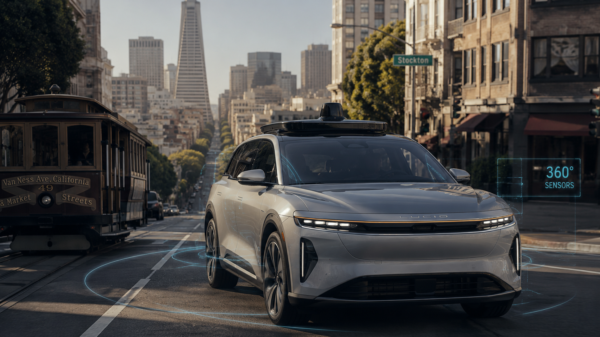

Ras Al Khaimah, the northernmost emirate in the United Arab Emirates, is betting its transport future on driverless cars as Chinese firms surge ahead in the global robotaxi race.
Announced on Wednesday, the northernmost emirate recently handed Chinese autonomous vehicle company WeRide an exclusive deal to build its transport system around self-driving vehicles. Consequently, the small Gulf state plans to skip traditional metros and buses altogether. Officials expect the gamble to reshape how millions of future visitors move around the city.
The deal came in October 2025 as Ras Al Khaimah prepared for a tourism boom. The emirate expects millions of visitors when the UAE’s first casino opens in 2027. Additionally, leaders want the city to resemble a Gulf version of Las Vegas. They see autonomous vehicles as faster to deploy than rail or bus networks.
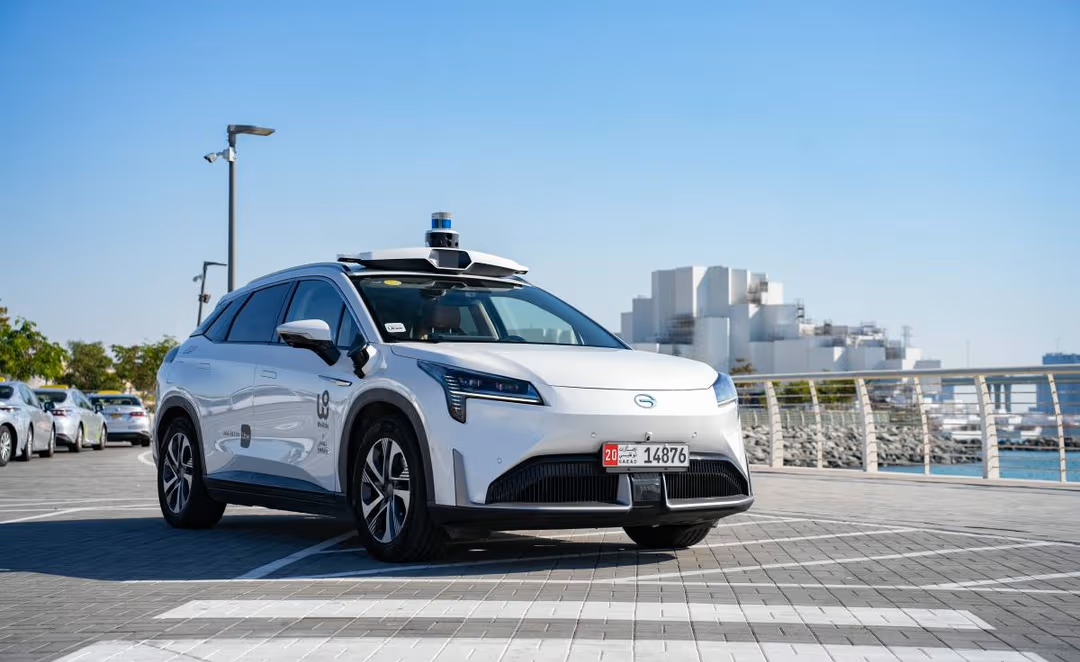
WeRide secured the exclusive partnership as the sole autonomous vehicle technology provider. The Guangzhou-based company already runs robotaxis in several Middle Eastern cities. Meanwhile, Ras Al Khaimah launched its first robobus pilot on Al Marjan Island. The service links resorts, hotels, and nearby attractions.
WeRide also operates robotaxis on the Uber platform in Riyadh. In October 2025, those services became Saudi Arabia’s first robotaxis. However, safety operators still sit inside the vehicles there. The company runs fully driverless services in Abu Dhabi.
Abu Dhabi hosts the Middle East’s first fully driverless robotaxi operations. Furthermore, WeRide became the first Level 4 autonomous service on Uber outside the United States. It achieved that milestone through its TXAI service on Yas Island. Consequently, the company built a strong first-mover advantage in the region.
Read more: Ford backs away from electric-vehicle plans as demand chills
Read more: Lithium-ion battery market set to double by 2030
Competition moves at global speed
Chinese autonomous vehicle firms now dominate Middle Eastern expansion. They include WeRide, Baidu’s Apollo Go, and Pony.ai. Meanwhile, U.S. rivals remain largely confined to domestic markets. Safety incidents, regulation, and lawsuits slowed their international ambitions.
Industry analysts say the competition now moves at global speed. Additionally, firms that fail to expand quickly risk falling behind. Tu Le of Sino Auto Insights described the market as a race. He said slow fleet growth can turn leaders into laggards.
Chinese technology has spread rapidly across the Gulf. Chinese firms already supply data centers, electronics, and electric vehicles. Consequently, autonomous vehicles fit an existing pattern of adoption. Gulf governments increasingly trust Chinese partners for large infrastructure projects.
WeRide received the UAE’s first autonomous driving license in July 2023. That license covered all types of self-driving vehicles. Furthermore, regulators allowed broad testing and deployment. The approval cleared a major hurdle for commercial expansion. The company’s Middle East fleet now exceeds 200 robotaxis.
Additionally, WeRide plans to reach as many as 1,000 vehicles by year-end. Executives expect tens of thousands of vehicles by 2030. Partners handle operations while WeRide supplies the technology.
Uber Technologies Inc. (NYSE: UBER) manages fleet operations and customer interfaces. Meanwhile, WeRide focuses on software, sensors, and autonomous systems. This partnership splits risk and cost between companies. Consequently, expansion moves faster than traditional public transport projects.
Since December 2024, WeRide and Uber tripled the Abu Dhabi fleet. They expanded service across major islands and airport routes. Additionally, the vehicles connect Zayed International Airport with city hubs. Early riders responded positively, according to company executives.
Read more: Could a breakthrough sodium battery material ease reliance on costly lithium supplies?
Read more: Department of Justice seeks $125M From Uber in discrimination case
Gulf governments support autonomous transport
The Middle East offers favorable conditions for self-driving vehicles. Predictable weather allows year-round testing and data collection. Additionally, minimal rain and no snow simplify sensor performance. Well-maintained roads further reduce complexity for autonomous systems.
Traffic enforcement across the Gulf also supports automation. Rules-based driving environments help autonomous systems make decisions. Consequently, experts describe the region as ideal for training algorithms.
Governments across the Gulf actively support autonomous transport. Saudi Arabia’s Vision 2030 sets ambitious automation targets. Additionally, officials want 25 per cent of goods transport to be autonomous. They also target 15 per cent of public transport within five years.
Abu Dhabi and Dubai share similar goals.
They aim for 36 per cent of all trips to be driverless by 2040. Furthermore, leaders want to shed oil-dependent reputations. They view robotaxis as symbols of technological progress. The contrast with the United States remains stark. General Motors Co. (NYSE: GM) paused most Cruise operations in late 2023. Safety incidents and regulatory pressure drove that decision. Consequently, Cruise shifted focus toward rebuilding safety systems.
Waymo, owned by Alphabet Inc. (NASDAQ: GOOGL), maintains limited deployments. It operates in Phoenix, San Francisco, and Los Angeles. Meanwhile, the company tests vehicles in Tokyo. It also plans a London launch this year. U.S. firms tend to expand cautiously overseas.
However, Chinese companies aggressively pursue supportive markets. They form joint ventures with local governments. Additionally, they adapt business models to local rules and needs.
In March 2025, Baidu Inc. (NASDAQ: BIDU) partnered with Dubai’s Roads and Transport Authority.
The deal launched Apollo Go’s first international fleet. Additionally, Baidu plans 100 fully autonomous robotaxis by 2026. It expects 1,000 vehicles by 2028.
Read more: Albemarle sells refining catalyst units as lithium supply glut persists
Read more: American Battery Tech stock slides after loss of US$58M DOE grant
Chinese companies bring key advantages
Pony.ai also moved quickly in the region. The company signed an agreement with Dubai’s transport authority. Meanwhile, supervised robotaxi trials will begin later this year. Pony.ai joined Abu Dhabi’s autonomous vehicle initiative in 2023.
The firm tested vehicles on Yas Island under government oversight. Furthermore, it aims for fully driverless operations next year. Such timelines reflect regulatory confidence in Chinese systems. They also show strong political support.
Analysts say Chinese companies bring key advantages. They promise data sovereignty to host governments. Additionally, they offer financing through joint ventures. That approach reduces upfront costs for public agencies. Chinese firms also localize operations heavily. They work closely with federal and local authorities. Consequently, laws and policies evolve alongside pilots. Subsidies and public funding further support deployments.
Capital constraints still limit Chinese companies. However, partnerships help offset investment needs. Industry observers say cooperation remains essential. Public trust also remains critical for long-term success. Ras Al Khaimah illustrates both opportunity and risk. The emirate lacks a metro and runs few public buses. Meanwhile, tourism growth will strain existing infrastructure. Officials chose autonomy over conventional transport solutions.
The city expects its casino resort to open in 2027. Wynn Resorts Ltd. (NASDAQ: WYNN) leads the development. Additionally, the project will draw global attention. Efficient transport remains central to the plan.
WeRide executives say the company targets sensible global markets. They prioritize regions where autonomy delivers social value. Furthermore, they seek long-term returns for stakeholders. Geopolitical and technical challenges still remain.
As deployments expand across the Gulf, the region becomes a testing ground. Abu Dhabi, Dubai, Ras Al Khaimah, and Riyadh host growing fleets. Consequently, Chinese firms gather massive real-world driving data. That scale strengthens their global competitiveness.
.