
Researchers at the University of Southampton have developed a new antibody design that could make cancer immunotherapy far more effective by giving T cells a stronger activation signal.
Reporting in Nature Communications, the team described how specially engineered antibodies can switch on immune cells that normally struggle to recognize tumors. Additionally, the approach aims to mimic how the immune system naturally responds to infections rather than cancer.
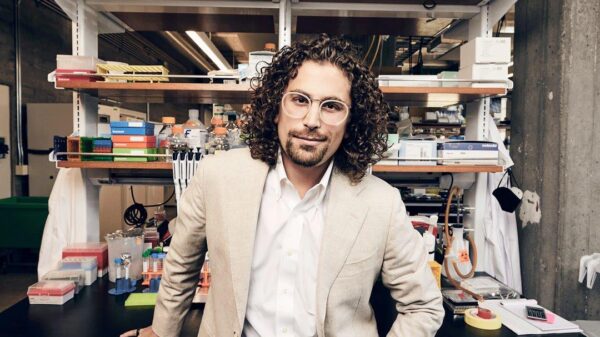
The work came from scientists at the University of Southampton’s Centre for Cancer Immunology, led by Professor Ali Al-Shamkhani. Their research focused on CD27, a receptor that plays a critical role in activating T cells. However, CD27 usually requires a matching ligand to fully activate those cells.
During infections, the body produces that ligand in abundance. In cancer, however, the signal rarely appears. Consequently, T cells often receive only partial instructions and fail to attack tumors aggressively. Antibodies can act as artificial keys by binding to immune receptors. Most therapeutic antibodies, however, have a Y-shaped structure with only two binding arms. As a result, they can engage just two receptors at once.
“We already understood how the body’s natural CD27 signal switches on T cells, but turning that knowledge into a medicine was the real challenge,” said Al-Shamkhani.
“Antibodies are reliable molecules that make excellent drugs. However, the natural antibody format was not powerful enough, so we had to create a more effective version.”
Although antibody therapies have transformed cancer care, many patients still do not respond. In many cases, T cells never receive the full activation signal needed to function properly. Furthermore, weak signaling can allow tumors to evade immune attack.
Read more: Prestigious medtech intelligence firm recognizes Breath Diagnostics for innovation
Read more: Breath Diagnostics completes install of advanced mass spectrometry system
The findings are a practical blueprint
To overcome this limitation, the Southampton team engineered antibodies with four binding points instead of two. Additionally, these antibodies recruit a second immune cell that forces CD27 receptors to cluster together. That clustering significantly strengthens the activation signal.
The process closely resembles how CD27 activates during a real immune response. Meanwhile, the design avoids relying on signals that cancer cells usually suppress. As a result, T cells receive clearer and stronger instructions. In laboratory experiments, the researchers tested the antibodies in mice and human immune cells. They observed much stronger activation of CD8⁺ T cells, which directly kill cancer cells. Additionally, those cells mounted a more durable antitumor response.
Compared with standard antibodies, the new design consistently produced more robust immune activity. However, the work remains at an early research stage. The scientists emphasized that further testing will be required before clinical use. Professor Al-Shamkhani explained that the strategy allows the immune system to behave more naturally. He suggested that future therapies could push immune responses closer to their full potential. Furthermore, he noted that the same design principles could apply to other immune receptors.
The findings offer a practical blueprint for next-generation immunotherapies. Additionally, they suggest that improving signal strength may be just as important as targeting tumors. The research points toward treatments that help the immune system do what it already evolved to do.
However, before advanced treatments ever reach patients, the story often begins earlier, when subtle symptoms lead doctors toward a cancer diagnosis. There are multiple companies working on streamlining this process.
Read more: Breath Diagnostics leader speaks at lung cancer education event in Louisville
Read more: Breath Diagnostics leaders promote their mission at Miami investment conference
Analysis can be completed in under ten minutes
For example, Breath Diagnostics Inc. has developed a breath-based diagnostic platform called OneBreath that aims to detect lung cancer at an early stage using a single exhaled breath.
Founded in 2015 and based in Louisville, Kentucky, the company has built its technology around capturing volatile organic compounds (VOCs) that cancerous cells release as part of metabolism. OneBreath uses a patented microreactor to chemically transform those VOCs into signals that ultra-high performance liquid chromatography mass spectrometry (UHPLC-MS) machines can read.
In clinical studies involving more than 800 patients, the test demonstrated approximately 94 per cent sensitivity and 85 per cent specificity for early-stage lung cancer, meaning it correctly flagged many true cases while reducing false alarms compared with conventional imaging. Furthermore, the company reports that the analysis can be completed in under ten minutes in labs equipped with mass spectrometry, and the process remains non-invasive and radiation-free.
Additionally, in research published in The Journal of Thoracic and Cardiovascular Surgery, OneBreath showed potential to not only diagnose but also predict pneumonia before symptoms appear when coupled with machine learning. By contrast, Exalenz Bioscience Ltd. employs a different breath analysis method to diagnose gastrointestinal and liver conditions. Its BreathID system measures the ratio of carbon dioxide isotopes in exhaled breath using molecular correlation spectroscopy.
When patients ingest a special substrate, the resulting isotope patterns can indicate the presence of Helicobacter pylori, a bacterium linked to ulcers and gastric cancer, among other conditions. Exalenz has secured regulatory clearances in both the European Union and the U.S. for its BreathID tests, enabling real-time, non-invasive diagnostics with results often available within 15 minutes.