
UK researchers have launched a major clinical trial that tests whether a handheld breath analyzer can detect pancreatic cancer far earlier than current tools allow.
Announced on Saturday, researchers stated they want to change the bleak outlook for a disease that usually appears only after it has advanced.
Imperial College London, working with Pancreatic Cancer UK, has begun evaluating the device across Scotland, Wales and England. The effort spans about 40 sites and aims to recruit roughly 6,000 people who arrive with symptoms that could indicate pancreatic trouble. Investigators say the scale gives them a rare chance to test a noninvasive screening tool in real clinics.
The device targets volatile organic compounds, or VOCs, that drift out in a single breath.
Researchers believe the chemical mix shifts when cancer forms. Normal cells and cancerous cells release different metabolic signals, and some of those signals circulate through the bloodstream before leaving the lungs.
The trial examines whether these VOC signatures can separate cancer from common digestive complaints.
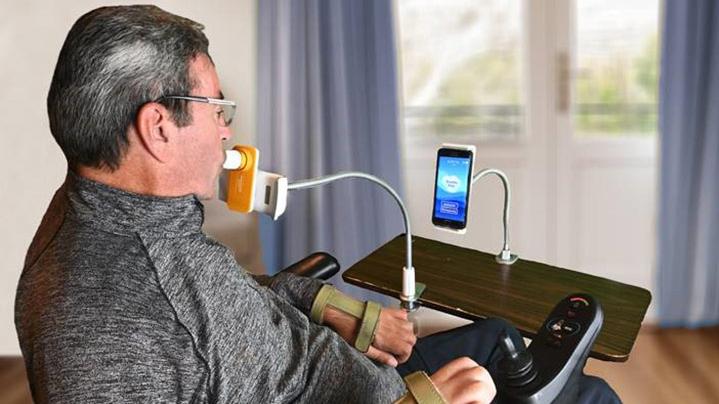
Participants breathe into a small, battery-powered sampler. The tool traps molecules and sends the data for analysis. Machine learning software then reviews the VOC pattern and searches for combinations tied to pancreatic tumors.
Engineers designed the system to catch subtle chemical cues that may appear before imaging scans detect anything unusual.
Pancreatic cancer remains one of the deadliest cancers in the UK. Many patients receive a diagnosis only after the disease has spread. National audits show that more than 60 per cent of cases are found at stage 4, which limits treatment options.
Read more: Breath Diagnostics adopts state-of-the-art mass spectrometer device for lung screening
Read more: Breath Diagnostics leaders promote their mission at Miami investment conference
Next phase to focus on real world accuracy
Symptoms such as back pain, indigestion or weight changes appear in many conditions, so general practitioners often face uncertainty. However, clinicians say a simple breath test could help them move patients to specialist care earlier.
Trial organizers expect the next phase to focus on real-world accuracy. They will compare breath-test results with clinical outcomes to measure sensitivity and specificity. Sensitivity shows how often the device correctly identifies patients with cancer. Specificity shows how often it avoids false alarms. Engineers also want to understand how the sampler performs at different disease stages, particularly early ones.
Pancreatic Cancer UK representatives view the trial as a potential step toward a new frontline tool. They said the technology still needs refinement, although they believe the data from thousands of patients will provide a strong picture of its strengths and limits. In addition, they see value in bringing screening closer to primary care, where most people first report symptoms.
Researchers note that breath-based diagnostics are part of a much broader push toward simpler cancer screening methods. Rapid urine tests for prostate cancer aim to detect markers within minutes.
Saliva-based oral cancer tests promise near-instant readings in community clinics. Multi-cancer blood platforms, some backed by major companies such as Illumina (NASDAQ: ILMN) and Guardant Health (NASDAQ: GH), search for genetic fragments that signal tumors in circulation. Meanwhile, several groups are experimenting with breath analysis for lung, liver and gastrointestinal diseases.
Read more: Breath Diagnostics opens Respiratory Innovation Summit with captivating presentation
Read more: Breath Diagnostics leader speaks at lung cancer education event in Louisville
Field is moving towards easy to use tools
Several companies are racing to bring breath based diagnostics for lung cancer to the clinic.
Breath Diagnostics, for example, has developed a platform called OneBreath, which captures VOCs in a single exhaled breath and chemically converts them into stable biomarkers for analysis.
Their published data suggest about 94 per cent sensitivity and 85 per cent specificity for early stage lung cancer detection using mass spectrometry based analysis.
Meanwhile Owlstone Medical operates the Breath Biopsy platform, which collects breath samples—often using its proprietary ReCIVA sampler—and analyzes VOC profiles to flag signs of lung or other cancers. Owlstone is now conducting a Phase 2 clinical trial of Breath Biopsy for lung cancer screening.
Both companies aim to offer a fast, non invasive alternative to imaging, using breath analysis to catch cancer earlier and more easily.
Consequently, experts argue that the field is moving toward tools that can function in busy GP offices without major equipment.
Imperial’s device builds on previous pilot studies that suggested VOC patterns can reveal disease processes. Earlier work involved small patient groups, but teams reported signs that chemical “fingerprints” differ when tumors form in the pancreas. This national trial now aims to confirm whether those findings hold in a much larger, more diverse population.
Investigators will also examine ease of use. GPs will record how long sampling takes, whether patients tolerate the device, and how quickly results return. The team wants practical information that could guide future rollout. Furthermore, software engineers plan to refine the machine learning models as more breath samples arrive, strengthening the algorithm with each new case.
Read more: Breath Diagnostics completes install of advanced mass spectrometry system
Read more: Breath Diagnostics leaders promote their mission at Miami investment conference
Trial includes routine checks for multiple conditions
Pancreatic cancer specialists often stress the need for better detection methods. They note that earlier diagnosis could increase surgical eligibility, which remains the only potential cure for many patients. However, only a small share currently qualify for surgery because most tumors are found too late. Clinicians hope that breath-based screening, if proven reliable, could shift that balance toward earlier treatment.
The trial also includes routine checks for other conditions that mimic pancreatic symptoms. Many participants will have gallstones, ulcers, or digestive inflammation. These comparisons matter because a screening tool must distinguish cancer from common benign issues to avoid unnecessary anxiety or procedures. Consequently, analysts will track how often the device misclassifies these conditions.
Funding comes from a partnership between the charity and academic groups. Engineers and clinicians expect the trial to run for several years as they collect and examine data. Interim reviews may adjust the algorithm or sampling method. In addition, researchers plan to study how smoking, diet, medications and environmental exposures affect VOC profiles.
Experts say the work fits a global trend toward noninvasive diagnostics. Breath analysis offers a way to capture thousands of molecules in moments, giving doctors insight into metabolic changes without needles or scans. Some teams believe these molecular signatures could allow multi-cancer detection from a single breath. Others see breath testing as a complement to imaging, providing a quick triage tool.
.