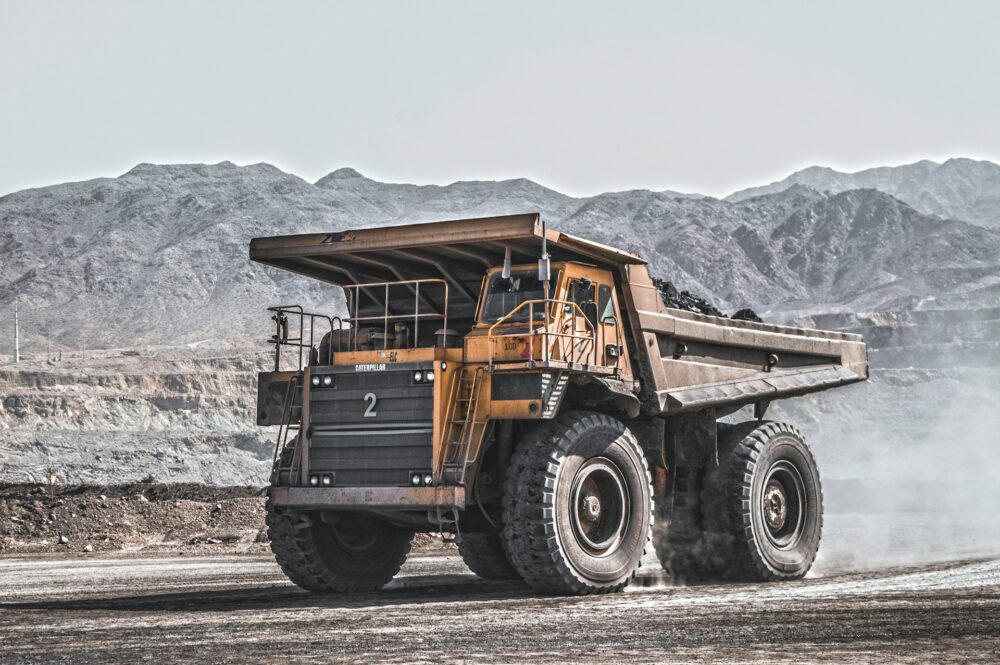

The US Government plans to buy additional equity stakes in critical minerals companies as it seeks to reduce China’s dominance in the sector.
Senior White House official, Jarrod Agen, outlined the strategy on Monday during remarks at the American Growth Summit in Washington, an event sponsored by firms including Citigroup (NYSE: C) and Nvidia (NASDAQ: NVDA).
Agen, who serves as the Executive Director of the National Energy Dominance Council, said the administration now treats direct equity investments as a normal tool. He explained that companies routinely approach federal officials with proposals, and many present strong arguments for government backing. He described these investments as the most direct way to build domestic capacity and close the gap with China.
The Trump administration has leaned on this approach as concerns rise about US dependence on foreign supplies of critical minerals. These materials power a wide range of technologies, including semiconductors, medical equipment, industrial magnets and defence systems such as radar, jet engines and missile guidance platforms. They also support battery manufacturing and other tools central to clean-energy goals. The White House views them as essential in both economic and national-security terms.
This policy push gained momentum during the trade war.
Beijing restricted exports of certain rare earth elements after Washington adopted its own export controls. The Chinese measures caused supply disruptions until both sides eased their respective actions. China produces about 70 per cent of the world’s rare earths and manages roughly 90 per cent of global processing. US officials argue that this gives Beijing expansive leverage over industries that rely on these inputs.
Read more: NevGold expands high-grade antimony discovery at Nevada’s Limousine Butte Project
Read more: NevGold delivers major growth at Idaho gold project
US expands list of critical minerals
Over the past year, the administration has deployed more than USD$1 billion to secure ownership positions in companies viewed as strategically important. Recent deals include USD$400 million for a 15 per cent stake in MP Materials (NYSE: MP) and USD$670 million tied to magnet manufacturer Vulcan Elements.
The government also paid USD$35.6 million for a 10 per cent stake in Canadian explorer Trilogy Metals (NYSEAMERICAN: TMQ) (TSE: TMQ). Additionally, it agreed to take an equity stake in Lithium Americas (NYSE: LAC) (TSE: LAC) as part of a restructuring of a USD$2.23 billion Department of Energy loan.
Agen did not name future targets, though he confirmed that more transactions are under review. He said the administration believes that government backing reassures investors and international partners.
The US has expanded its list of critical minerals as well. Last month, federal officials added copper and metallurgical coal to the roster.
The United States has also recognized antimony for inclusion on its critical minerals list. Antimony is used in alloys, batteries, flame‑retardants, solar panels and military equipment because it strengthens metals and resists corrosion. Until quite recently, the U.S. lacked a domestic source of antimony. In recent months, United States Antimony Corporation (NYSE: UAMY) opened a smelter and mining operation in Thompson Falls, Montana.
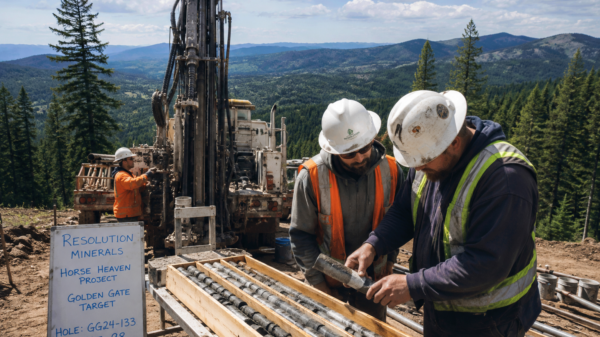
Smaller firms such as NevGold Corp (CVE: NAU) (OTCMKTS: NAUFF) (FRA: 5E50), which recently found antimony rich samples at its Nevada Limousine Butte project, could also emerge as future contenders for government contracts if they advance exploration and obtain permits.
Read more: NevGold targets U.S. critical mineral supply chain with new antimony-gold find
Read more: NevGold Expands Gold-Antimony Potential at Limousine Butte in Nevada
Government participation sends strong message
Japanese PM Sanae Takaichi said Japan and the US will explore rare earth mining in an island in the Pacific. The plan aims to open new sources and reduce reliance on Chinese processing facilities.
The US is also pursuing agreements with eight allied countries to secure minerals needed for AI-related technologies. Delegates from Australia, Israel, Japan, the Netherlands, Singapore, South Korea, UAE and the UK will discuss cooperation on December 12. In addition, officials selected these nations because of their roles in semiconductor manufacturing and their substantial mineral reserves.
Agen noted that government participation sends a strong message to markets. He stated that companies view Washington’s involvement as an assurance that the US intends to compete aggressively in the sector.
.
NevGold Corp is a sponsor of Mugglehead news coverage
.









Larry Woods
December 8, 2025 at 11:31 am
Why do you say that the US currently lack a domestic source for Antimony? This is inaccurate and false. UAMY (United States Antinomy) is CURRENTLY mining AND Smelting Antimony in Thompson Falls Montana.
Please fact check and correct.
Joseph Morton
December 9, 2025 at 6:52 pm
We try to make sure we’ve got the latest, but we’re not immune to missing some sometimes. Thank you.